
Is it worth increasing cell efficiency? A new metric tells you when
A group of scientists is proposing a new metric – the value of efficiency – to calculate the maximum allowable cost to increase a cell’s efficiency and improve the levelized cost of electricity (LCOE). The researchers expect that more regional diversification may be seen at the global level in the years to come, with the proposed metric offering higher values in North America, Central and Northern Europe, Japan, Australia, and New Zealand.

Construction begins at Hydrogen Park South Australia
The transformation of South Australia’s energy system has taken another step forward with early site works at a green hydrogen facility near Adelaide. The plant will integrate what is billed as Australia’s biggest electrolyzer of its kind.

Ather Energy to set up Li-ion, EV production unit in India
Ather Energy, an Indian electric scooter maker, has signed a memorandum of understanding with the government of the Indian state of Tamil Nadu to open a new production facility for lithium-ion batteries and electric vehicles.

Narrowing down 166 billion battery materials
Researchers at the U.S. Argonne National Laboratory have applied a combination of machine learning and artificial intelligence to help narrow down a list of 166 billion molecules that could be used to form the basis of a battery electrolyte. The technique, say the researchers, offers a way to greatly reduce the cost of narrowing down such an enormous data set, while still providing a precise understanding of each molecule and its likely suitability.
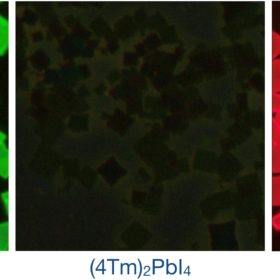
New sandwich-like material for lead-free perovskite solar cells
Scientists from Purdue University claim to have created a new material that incorporates both organic and inorganic materials. Its hybrid structure is said to improve the thermal stability of perovskite PV cells without the need to use lead.
The ‘butterfly effect’ of Chinese PV listings
A recent study shows that PV costs have declined faster than any other energy technology over the past two decades. The researcher behind the study said this would not have been possible without the “butterfly effect,” which is based on the idea that a small change in one part of a complex system can have a large impact elsewhere. The researcher also attributed the the rapidly declining cost of PV to Chinese manufacturing and strong US investor support.
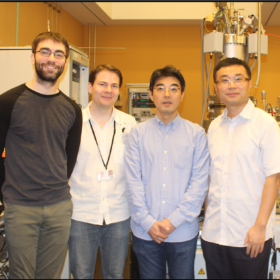
The precise chemical nature of perovskite defects
A research group in Okinawa, Japan has been able to observe and characterize structural defects in an organic-inorganic perovskite solar cell. Their findings could help to inform future approaches to optimizing and improving perovskite stability.
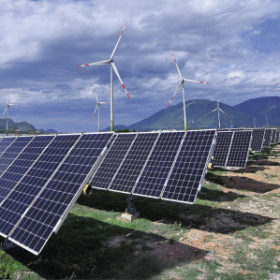
Hybrid power plants, and the move beyond LCOE
A new paper published by the U.S. National Renewable Energy Laboratory delves into the potential of hybrid power plants combining wind and solar generation. Development of such plants, according to the lab, is driven by the need to increase profitability and consider metrics beyond levelized cost of electricity, taking into account time varying revenues and better managing these renewables inherent variability.

MIT scientists develop a coating for perovskites
Researchers at the Massachusetts Institute of Technology have developed a transparent coating they successfully incorporated into a perovskite solar cell, increasing efficiency and stability. The group says with further improvements the material could be used as a simpler, less expensive alternative to widely used indium tin oxide as a transparent conductive material for a range of applications.

Not even crumbs for the solar industry in UK party election manifestos
The political statements issued by the Conservatives, Labour, the Lib Dems and even the Green Party almost entirely ignore solar power amid a welter of vague ambitions ahead of the December vote. The increasingly obvious effects of climate change have clearly entered the consciousness of voters, though – the net zero commitment even got as high as page 55 of the Conservatives’ 62-page document.
