
Power Ledger, Japan’s Kepco extend blockchain energy collaboration
Japanese utility Kansai Electric Power has extended a demonstration project with Australian P2P energy pioneer Power Ledger to track renewable energy certificates and trade PV-generated electricity.

100% renewables means 95% less water consumption for conventional power generation
According to a new study by Finland’s LUT University, solar PV consumes between 2% and 15% of the water that coal and nuclear power plants use to produce just 1 MWh of output; for wind, this percentage ranges from 0.1% to 14%. Under the researchers’ best policy scenario, water consumption could be reduced by 75.1% by 2030, compared to 2015 levels.
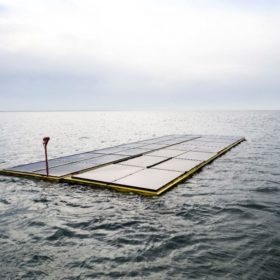
Offshore PV system goes online in North Sea
The 8.5 kW pilot project, which was launched in February 2018, will soon be expanded to 50 kW. The Dutch consortium behind the installation eventually plans to expand it to 1 MW and then up to 100 MW at a later stage. The Netherlands Enterprise Agency (RVO) provided financial backing for the project.
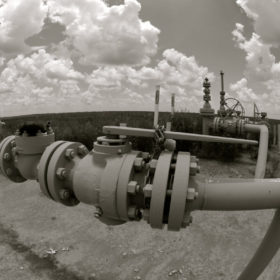
Investors learn about Tasmania’s green hydrogen potential
The Australian state of Tasmania has approached international investors to present its unique potential for the production of hydrogen from renewable sources, as it aims to position itself at the forefront of the nation’s green hydrogen push.
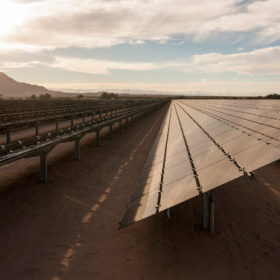
ARENA announces major research funding into end-of-life solar PV issues
The Australian Renewable Energy Agency has announced AUD 15 million ($10.3 million) in research funding to investigate end-of-life issues for PV modules. Ultimately it is hoped that the research will increase solar PV efficiency while lowering costs.

US research lab rewires solar cell efficiency to 27.3%, sees path to greater than 32%
NREL has published a paper showing an experimental solar cell, with a unique technique for wiring two separate solar cells into one, that increased the cell’s efficiency by 4%. The document also offers a respectable review of other technologies being developed.

Neural networks improving solar power forecasting
An international research team has developed a new approach for solar power forecasting that combines neural networks and pattern sequences for the first time. The performance of the new Pattern Sequence Neural Network (PSNN) was tested on an Australian data set that includes information from two years of forecasts. It can be used with different clustering and cluster-sequence extraction algorithms, and can be applied to multiple related time sequences

Another one fights the dust
Scientists from Israel have used nanowires to detach particles from the surfaces of solar panels. The proposed microscopic self-cleaning technology is said to raise the efficiency of particle removal with hydrophobicity.
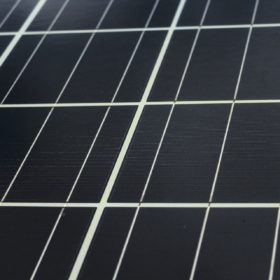
Liten research institute claims 24.25% efficiency for heterojunction cell
The French institute said the result has been certified by ISFH CalTeC, in Germany. The manufacturers claim they were able to increase cell performance by improving the plasma-enhanced chemical vapor deposition of amorphous silicon nanolayers and the conductive and anti-reflective transparent oxide layers.
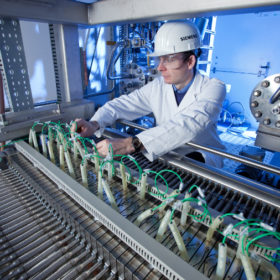
European Investment Bank signs hydrogen investment deal
The EIB and the Hydrogen Council aim to jointly develop new ways to generate funding for hydrogen projects under the European Commission’s InnovFin Advisory program. The two parties, however, have not disclosed the financial terms of their planned collaboration.
