
Coupling pumped hydro with renewables and other storage technologies
The combination of pumped hydro with other storage technologies can increase renewables penetration, improve operational safety and reduce maintenance costs at large-scale hydropower plants, according to new research. The study also focuses on techniques to determine the optimal size of renewables-based pumped hydro storage systems. Costs for hybrid solar-pumped hydro projects currently range from $0.098/kWh to $1.36/kWh.
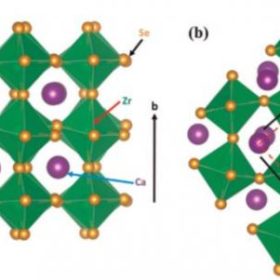
Chalcogenide perovksites for PV energy and waste heat recovery
According to new research, metal chalcogenide perovskites can be used as a thermoelectric material than can convert thermal energy from the sun to usable electric power. These materials, which can also be used to develop perovskite PV cells, are known for their high thermal and aqueous stability, along with their nontoxic elemental composition.

Nice Solar Energy sets new world record for CIGS efficiency
Chinese-German JV Nice Solar Energy has set a new world record of 17.6% efficiency for a CIGS module with a 0.72m² surface. The achievement has been confirmed by German testing organization TÜV Rheinland.

Star Wars’ Death Star with PV modules could surpass global energy needs by 10 times
EOn has calculated the number of PV modules that could theoretically be installed on the Imperial space station from the popular film series. It concluded that even a small version of the station would be able to provide enough solar power to supply 2.5 billion households on Earth.
Is it worth increasing cell efficiency? A new metric tells you when
A group of scientists is proposing a new metric – the value of efficiency – to calculate the maximum allowable cost to increase a cell’s efficiency and improve the levelized cost of electricity (LCOE). The researchers expect that more regional diversification may be seen at the global level in the years to come, with the proposed metric offering higher values in North America, Central and Northern Europe, Japan, Australia, and New Zealand.
Construction begins at Hydrogen Park South Australia
The transformation of South Australia’s energy system has taken another step forward with early site works at a green hydrogen facility near Adelaide. The plant will integrate what is billed as Australia’s biggest electrolyzer of its kind.

Ather Energy to set up Li-ion, EV production unit in India
Ather Energy, an Indian electric scooter maker, has signed a memorandum of understanding with the government of the Indian state of Tamil Nadu to open a new production facility for lithium-ion batteries and electric vehicles.

Narrowing down 166 billion battery materials
Researchers at the U.S. Argonne National Laboratory have applied a combination of machine learning and artificial intelligence to help narrow down a list of 166 billion molecules that could be used to form the basis of a battery electrolyte. The technique, say the researchers, offers a way to greatly reduce the cost of narrowing down such an enormous data set, while still providing a precise understanding of each molecule and its likely suitability.
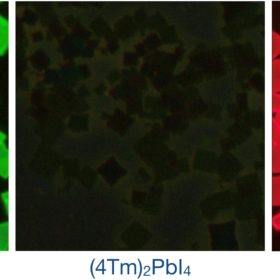
New sandwich-like material for lead-free perovskite solar cells
Scientists from Purdue University claim to have created a new material that incorporates both organic and inorganic materials. Its hybrid structure is said to improve the thermal stability of perovskite PV cells without the need to use lead.
The ‘butterfly effect’ of Chinese PV listings
A recent study shows that PV costs have declined faster than any other energy technology over the past two decades. The researcher behind the study said this would not have been possible without the “butterfly effect,” which is based on the idea that a small change in one part of a complex system can have a large impact elsewhere. The researcher also attributed the the rapidly declining cost of PV to Chinese manufacturing and strong US investor support.
