
Heat pumps are transforming domestic hot water production – How to avoid hygiene risks?
Heat pumps are increasingly used for domestic hot water in Europe due to their efficiency and compatibility with solar power, but their lower operating temperatures can create conditions where Legionella pneumophila may grow if systems are poorly designed. Proper hydraulic design, temperature control, and periodic thermal disinfection ensure both high efficiency and safe, hygienic operation.

Toshiba rolls out AI-powered solar plant portfolio management platform
Toshiba has unveiled a PV management platform within its Spinex for Energy portfolio that enables real-time monitoring and O&M of multiple solar plants.
The system uses AI to track plant performance, detect faults, calculate capacity and PR metrics, automate reporting, and support troubleshooting.

New simulation platform lets energy operators train against realistic cyberattacks
Researchers at Germany’s Fraunhofer FKIE institute developed PowerRange, a virtual simulation platform that helps power grid operators safely test cybersecurity measures and respond to realistic cyberattacks. The platform supports both traditional and renewable grids, offering immersive training across IT, OT, and control systems while highlighting the importance of coordination, communication, and practical defense strategies.

Graphene could improve durability of perovskite solar cells
Nearly 20 years after the first perovskite solar cell was developed, its efficiency and durability are drawing interest from industries worldwide. The defense sector is among the most active, as rising geopolitical tensions drive record government spending to protect critical systems from disruption and attack.

Antimony emerges as strong candidate dopant for Czochralski PV wafers
Researchers from Australian National University and Longi used photoluminescence imaging to analyze dopant distributions in RCz-grown silicon wafers doped with antimony, phosphorus, and gallium, finding highly uniform radial concentration profiles suitable for high-efficiency solar cells. The study also found that antimony-doped wafers provide more stable axial doping along the ingot, highlighting their potential for next-generation photovoltaic manufacturing.
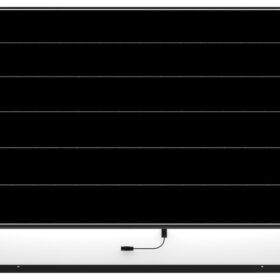
Aiko launches 545 W back-contact solar module with 25% efficiency
The Chinese manufacturer said its new back-contact module delivers up to 545 W and over 25% efficiency in a compact rooftop format for residential, C&I, and off-grid applications.

Sliding shutters integrate PV for building facades
German manufacturer Ehret has launched SolarSlide, a sliding shutter with integrated PV modules developed with the Fraunhofer Institute for Solar Energy Systems (Fraunhofer ISE). It provides solar shading while generating electricity for residential and commercial facades.
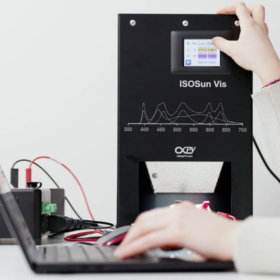
InfinityPV releases new compact solar simulator
The Danish company says its new product is ideal for small to medium-sized solar cell testing. It can simulate light conditions in the 390–700 nm range.
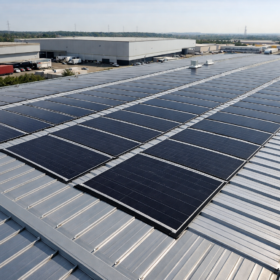
Lightweight PV modules could unlock more than 85 GW of untapped rooftop potential in Europe
In its second monthly column for pv magazine, the Becquerel Institute explains that Europe has vast commercial and industrial rooftops suitable for solar, but decades-old structural limits block conventional PV panels, creating an 85 GW untapped potential. Lightweight PV modules, commercially available and up to 50% lighter, can unlock this constrained market, meeting regulatory, economic, and technical needs for solar deployment across the continent.
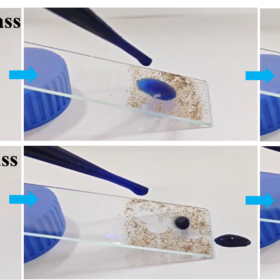
Transparent superhydrophobic self-cleaning coating increases solar cell efficiency by 4.75%
Researchers have developed a PFAS-free dual-layer sol-gel and hydrophobic silica coating that repels water, dust, and dirt while maintaining high light transmission for solar panels. The transparent, self-cleaning coating improved photovoltaic efficiency from 13.90% to 14.56%, demonstrating strong durability and potential for future commercial applications.
