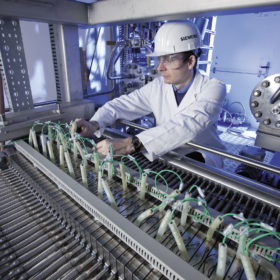
The slow, inexorable rise of green hydrogen
The International Renewable Energy Association says the integration of hydrogen into the energy transition will not happen overnight and electrolysis costs will not be halved until the 2040s. That hydrogen and related products could revolutionize the world energy landscape, however, is not in doubt.

The ballooning potential of curved solar cells
Researchers in the U.S. claim to have developed a manufacturing process based on the use of a latex balloon that could lead to the production of more efficient curved electronic devices, including hemispherical solar cells.

Tuning titanium in perovskite cells
Scientists from Russia’s NUST MISIS institute and the University of Rome have discovered a two dimensional titanium carbide can improve the performance of a halide perovskite solar cell when added in microscopic amounts across the various cell layers.
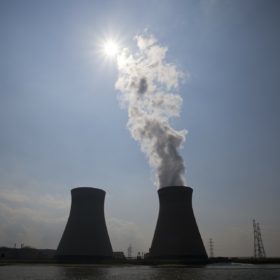
Logic supports renewables, not nuclear
The latest edition of the World Nuclear Industry Status Report gives the energy source little hope in the race against fast, widespread, job-friendly, popular renewables. The report reiterates clean power is taking the lead in the world’s energy system and nuclear is not only too costly a remedy for carbon emissions but too slow to deploy. Nuclear output grew only 2.4% last year while solar and wind power volumes grew 18% and 29%, respectively.
New efficiency record for flexible CZTS
Scientists at South Korea’s Daegu Gyeongbuk Institute of Science and Technology have set a new efficiency record of 11.4% for a cell based on a copper zinc tin sulfide thin film applied to a flexible substrate.
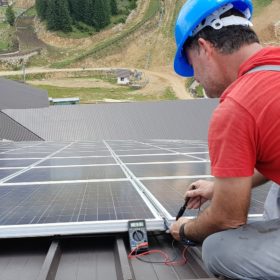
Live fast, die young: MIT study proposes use of 10-year panels
Research has found even short-lived, 10 to 15-year solar panels could provide enough return for bankable projects. The researchers believe panel costs, coupled with an industry mindset now fixed on the final solar energy price rather than costs per kilowatt installed, may open opportunities for PV products currently snubbed because of a short lifecycle.

Siemens and TIES to open battery research center in China
The facility is set to open this year and will offer battery suppliers digitalization research and manufacturing consulting. Smaller manufacturers will be able to use shared laboratories for research.

Solar, renewables and hydrogen for greener marine transport
A new report in Sweden suggests that renewables are an ideal source of power for marine vessels, based on a case study in which solar PV and proton-exchange membrane fuel cells, combined with a diesel generator, were used to reduce the greenhouse gas and particulate emissions of cruise ships by almost 10%.

UK scientists find way to cut down indium
A research team led by the University of Liverpool has developed a transparent conductive oxide material to replace tin with molybdenum. The results demonstrated better performance and potentially lower material costs than the transparent conducting layers used in today’s commercial solar cells.

A common language for bifacial PV
This week pv magazine was in Amsterdam for the sixth edition of the BifiPV workshop, where the discussion focused on the impressive achievements made by bifacial solar modules and the challenges the technology faces as it moves toward mainstream adoption.
