
Solar-powered smart window technology takes a big leap forward
Scientists at the U.S. Department of Energy’s National Renewable Energy Laboratory (NREL) have presented a thermochromic solar window with a conversion efficiency of 11.3%. Meanwhile, performing experiments on dye-sensitized solar cells, Cambridge scientists have determined the molecular structure of working solar cell electrodes within a fully assembled device that works like a window.
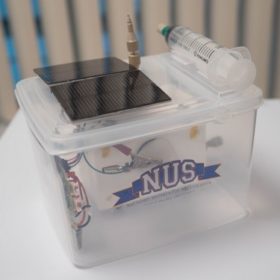
Singapore’s NUS researchers develop alternative ethylene production using solar energy
The prototype device, developed at the NUS Department of Chemistry, simulates photosynthesis to produce ethylene from carbon dioxide and water using natural sunlight.

Manufacturing innovations on show at European Solar Technology Forum
This week, pv magazine attended the European Solar Technology Forum, where researchers unveiled new innovations from across the manufacturing spectrum, prompting plenty of discussion over how the future will look for solar in terms of the technology available and its applications. Bold claims of the potential for a further 20% cost reduction in manufacturing were made.

NASA develops new tool to measure total solar irradiance
NASA is on course to more accurately monitor the level of solar irradiance that reaches the earth, with the launch of a instrument for the International Space Station.
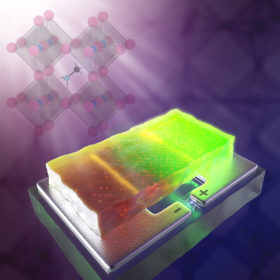
California researchers observe perovskite degradation at nano-scale
A group of researchers led by the University of California San Diego (UCSD) has utilized a novel technique to delve deep into hybrid perovskite materials without damaging. The team was able to observe ion migrations within material, which reduced its efficiency as a solar cell material.

French forces unite to develop solar PV desalination plants
Two French companies have partnered to develop projects that combine renewable energy generation with water desalination. This is an area the solar sector is targeting specifically for the developing world, due to its off-grid compatibility.

DNV GL: AI will make renewables more efficient
A paper published by consultancy DNV GL forecasts major growth in the use of artificial intelligence (AI) applications within renewable energy, and outlines the risks and opportunities of such technologies.
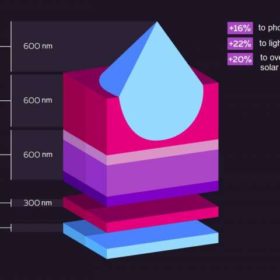
New coating steps up solar cell efficiency by 20%, Russian researchers find
By putting silica particles inside the top electrode, scientists from Russia’s ITMO University have developed a new solar cell coating, which helps avoid overheating and diminishes light reflection, thus increasing overall efficiency by 20%.
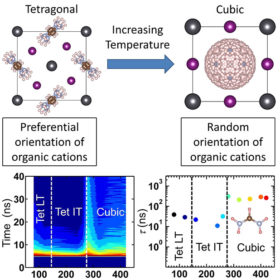
Rotating molecule discovery could bring higher efficiencies to perovskite PV
A team of researchers led by the University of Virginia in the USA has discovered that rotating molecules within a solar are one of the key mechanisms behind the high levels of conversion efficiency seen in perovskite solar cells. The discovery could allow scientists to select and design new materials capable of even more efficient PV generation.
Solliance hits new perovskite milestone
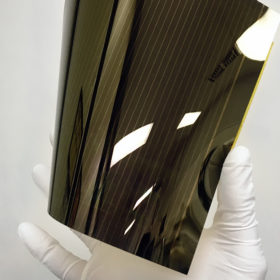
European research group Solliance has announced new conversion efficiencies of 13.5% (cell) and 12.2% (module) for its perovskite based PV technology. The group states that the records were achieved in a factory setting, using an industrially scalable roll to roll process.
