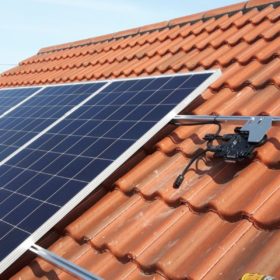
California is learning to trust 100% residential solar power
California utility PG&E has tested levels of residential solar power up to 100% penetration, and how to mitigate the effects of voltage and thermal overload via smart inverters and traditional transformer and circuit upgrades — with smart inverters shown to allow for up to 100% penetration at cost-effective pricing.

Scientists make an exciton organic PV discovery
Researchers at the U.S. Department of Energy’s Lawrence Berkeley Laboratory have found a mechanism for creating a charge in molecular materials. The findings, say the team, could lead to new approaches in the design of PV devices.
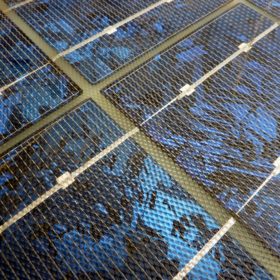
Taiwan’s PVEVL expands performance tests to perovskite, quantum dot and organic solar cells
Despite the difficulties its solar manufacturing industry faces, the Taiwanese government is ramping up its R&D efforts to measure the efficiency of what it calls “new-generation light-driven photovoltaics”.

Global renewables R&D will further drive down energy transition cost
The Netherlands’ Organisation for Applied Scientific Research says renewables would not only contribute to a cheaper energy system but would also create more opportunities for new business, exports and jobs – as well as a cleaner environment.
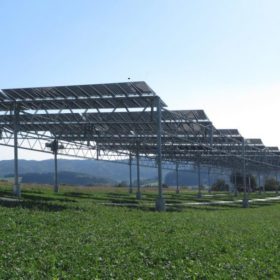
Agro PV raised efficiency of land by shielding crops from harsh sunlight
Germany’s Fraunhofer Institute for Solar Energy Systems has demonstrated combining solar generation with agricultural activity is now not only viable at lower costs, but may be particularly suitable for arid regions.

UK researchers warn of potentially rising silver costs
A study has highlighted that the two growth phases of solar panel manufacturing – after the 2008 global downturn and again after 2011 – coincided with higher prices for the precious metal.
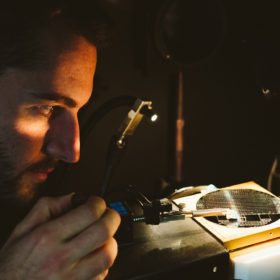
DuPont unit and Fraunhofer ISE to work on c-Si module testing
The PV solutions division of DuPont Electronics and Imaging has revealed plans to work with the Fraunhofer ISE on optimizing testing protocols for crystalline silicon solar modules.

Getting (almost) all our energy from the sun by 2050
Solar could meet approximately 68% of global energy demand with other renewables making up the rest, according to a new report. A 100% renewable energy system could also create 22 million solar jobs by 2050, the study claims. Keeping global warming below 1.5 degrees C, though, would require FITs for projects up to 40 MW in capacity, auctions for bigger systems, removing fossil fuel and nuclear subsidies and providing more education and R&D and less red tape.

Belgian scientists develop solar hydrogen panel
The innovation is said to be able to produce 250 liters of hydrogen per day and can convert sunlight and water vapor from the air directly into hydrogen gas with an efficiency of 15%.
Australian researchers to develop new tandem PV cell measurement equipment
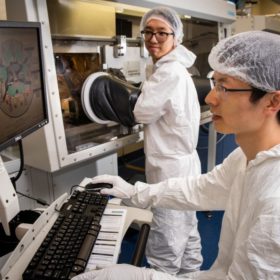
The Commonwealth Scientific and Industrial Research Organisation (CSIRO) and Adelaide-based laser supplier Lastek are developing equipment and procedures to accurately measure the performance of multi-junction solar cells with the help of an LED-based solar simulator.
