U.S. boosts energy storage 126% in Q2
According to the latest U.S. Energy Storage Monitor, a quarterly publication from GTM Research and the Energy Storage Association (ESA), the United States deployed 41.2 megawatts of energy storage in the second quarter of 2016, an increase of 126% over the first quarter of the year. The nation is on track to deploy 287 megawatts of energy storage this year.
Quality: Minor differences in yield percentage make the difference between good and bad investment
Changing technology, pressure to cut costs, dizzying price slumps and a number of other issues make solar module quality control as relevant as ever. The danger that modules could fail outright remains slim, so module reliability is still decisive for the success of the investment, explains George Touloupas, Director of Technology and Quality at CEA, in preparation of the 4th pv magazine Quality roundtable at SPI.
Asian growth to drive global DG solar boom report
Falling technology costs and international efforts to reduce carbon emissions will help make PV the biggest segment of the global distributed-generation market in the coming years, led by rapid growth in Asia, according to a new report.
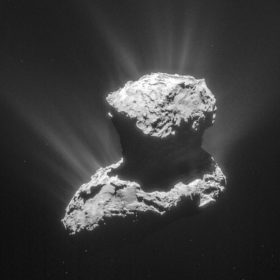
Philae’s comet location revealed while Rosetta’s PV prepares for last adventure
The European Space Agency (ESA) has tracked down Philae, Rosetta’s spacecraft probe, resting in a dark crack on Comet 67P. The news bears great scientific significance for ESA as well as a certain emotional value for PV fans who have watched the Rosetta mission being entirely powered by the sun for about twelve years.
USAID to fund solar research projects in India and Morocco
The U.S. Agency for International development (USAID) announced that it will provide USD10 million in funding to a number of projects aimed at addressing critical areas of development, two of the projects center on solar research in India and in Morocco.
Jinko Solar and Heraeus enter into fresh collaboration
The established partners enter a new phase of their cooperation, as Jinko Solar is using Heraeus Photovoltaics front-side silver paste on its new high-efficiency solar cells.
Dyesol secures $1m funding for Perovskite cell research
The grant from the U.K.’s Engineering and Physical Sciences Research Council will enable the Australian organic cell developer to better understand the impact of halide modified titania on Perovskite cell performance.
Hareon is investing in a new PV research institute
Chinese PV firm Hareon Solar Technology has announced that it will make a 10 million yuan investment in a new PV research institute, which will help to support its solar business.
Lithium-ion battery test centre opens in Canberra, Australia
The Canberra Institute of Technology has opened the new facility, backed by a A$450,000 ($344,525) grant from Australian Renewable Energy Agency (ARENA), to assess the potential for residential energy storage.
Grid-scale battery storage not yet 'panacea' for Australia renewables
A senior solar energy researcher from the University of Queensland has questioned the role of grid-scale battery storage as the “missing link” of Australia’s shift to renewables, and suggested that much more research needs to be done if the technology is to be rolled out successfully.
