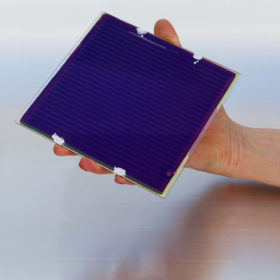
Imec’s perovskite-based PV module reaches 12.4% efficiency
The Belgian research institute has improved the efficiency of its 4x4cm² perovskite module by 1.1%.

Schmid and MacDermid 2017 Technology Highlights award winners
Schmid Group and MacDermid Enthone have been selected as pv magazine’s 2017 Technology Highlights award winners. In late March, the prize jury of industry experts met to select the winners, from a shortlist of eight innovative new PV production equipment and materials. Dozens of entries to the award were received from suppliers worldwide. Alongside the two winners, the jury selected Sinton Instruments as worthy of special commendation as having provided the ‘Technology to Watch’ in 2017.
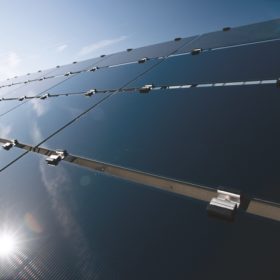
First Solar seeking sale of its share in yieldco 8point3 Energy
The Arizona-headquartered solar power company wants to strategically align its resources to support its new Series 6 module, and thus seeks sale of its stake in the joint SunPower yieldco. SunPower reaffirms belief that the yieldco can deliver long-term assets and growth.
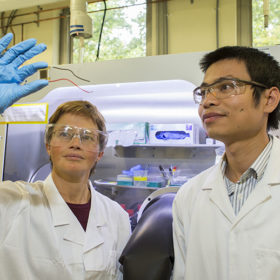
ANU develops 26% efficient cell using perovskites
Researchers at the Australian National University (ANU) have achieved 26.4% efficiency using a stacked configuration of silicon and perovskite solar cells. The perovskite cell is semi-transparent and, according to ANU, could bring down the cost of generating solar power.

Fraunhofer ISE to investigate PV panels for commercial vehicles
German solar research institute Fraunhofer ISE is investigating the development of integrated PV panels for commercial vehicles. After conducting analyses using real life solar irradiance data, Fraunhofer sees great potential in this field.
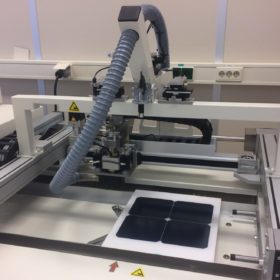
Tempress & ECN develop process for IBC cell production
Equipment manufacturer Tempress has teamed up with Dutch research center ECN to develop a production process for n-type IBC solar cells with efficiency above 21%. A pilot of the new process was completed in just three months, illustrating its compatibility with mass production.
Solutions unveiled for next generation storage
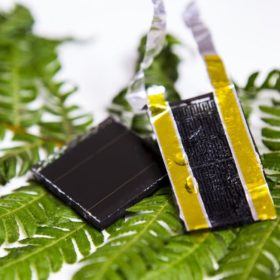
Two innovative new technologies with potential applications in solar were unveiled this week. Research teams across the world are looking at new way to boost solar’s stability by integrating with storage. Scientists in Australia and in China demonstrate their innovative steps toward achieving this.
Korean University team develops 21.2% efficient perovskite solar cell
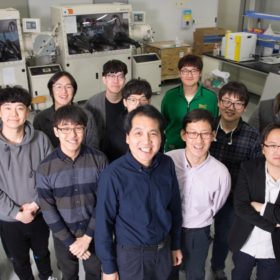
Researchers at the Ulsan Institute of Science and Technology (UNIST) in South Korea have announced the development of a method to produce perovskite solar cells, which the University says could contribute to commercialization of the technology.

British firm develops Brexit solar panel that harvests only UK sun
The two-facial module can be angled to ensure Brexit-supporting homeowners only harvest solar energy intended for the British Isles. 350 watt and ‘actual power’ versions available.
Fraunhofer ISE and EVG set 31.3% efficiency for silicon multi-junction solar cell
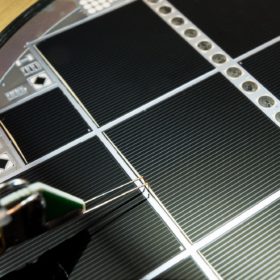
The German research institute and the Austrian semiconductor specialist have achieved a 31.3% efficiency for a silicon-based multi-junction solar cell. The result improves the previous record of 30.2%, which was also set by EVG and Fraunhofer ISE.
