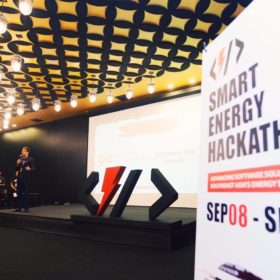
Smart Energy Hackathon kicks off in Bangkok
More than 80 energy experts, coders and product designers from across Southeast Asia gathered in Bangkok today for the Smart Energy Hackathon, a 30-hour competition that aims to foster the development of new digital energy solutions such as public blockchains for the provision of PV generation data.

Scientists look into insect eyes for new solar cell design
Mimicking a compound eye of a fly, Stanford University scientists have packed tiny perovskite cells into a hexagon-shaped epoxy resin scaffold, improving the material’s durability when exposed to moisture, heat and mechanical stress in a breakthrough that may open the door to the awaited improvement in perovskite’s operational stability.
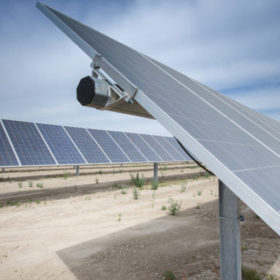
Germany’s VDMA publishes new edition of PV Roadmap
The roadmap provides an overview of the market for crystalline photovoltaics in 2016 and forecasts the most important developments for the coming years.
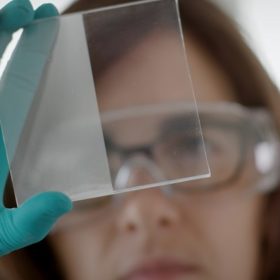
Netherlands: Anti-soiling coating for extra PV power boost, finds DSM
The Dutch materials specialists have conducted new field tests in China that show how its new anti-soiling coating can keep solar panels cleaner for longer, resulting in additional yield on solar modules.
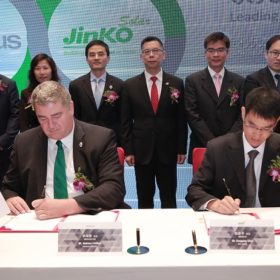
Solar heavyweights Heraeus and JinkoSolar team on PV Super Cell partnership
The agreement between the German metallization solutions company and the leading Chinese Tier-1 solar manufacturer will see the two companies jointly develop ‘Super PV Cells’ in what is the third such strategic partnership between them.
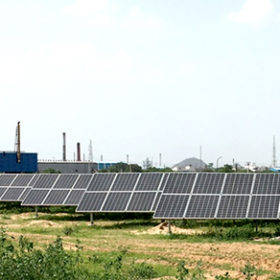
International research team uses algorithm to reduce negative impact of inertia emulation of PV in micro-grids
The computer-based algorithm seeks to make the micro-grid work like a large power grid with inertia, thus improving its stability and reliability.
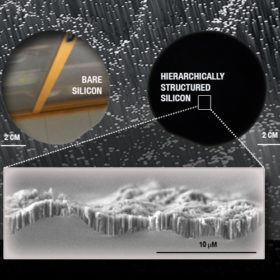
US scientists use nanoscale structures to lower reflectivity in solar cells
The researchers used micro- and nanometer length structures to develop anti-reflective coatings to reduce reflectivity in optical devices such as solar cells, glasses and cameras.
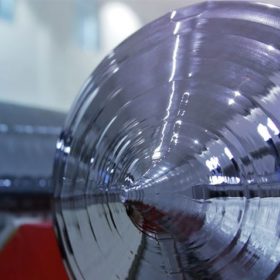
EU Researchers achieve breakthrough in nano-scale c-Si
A team of scientists representing the photoNvoltaics project, funded by the European Union, has been able to develop a crystalline silicon cell with an effective thickness of just 830 nano-meters.

Future PV: The feasibility of solar-powered hydrogen production
There is a solid business case to combine PV plants with electrolyzers, as generation costs are low enough to competitively produce hydrogen as a fuel, says Bjørn Simonsen of NEL Hydrogen. He will speak at pv magazine’s Future PV event at SPI in Las Vegas.
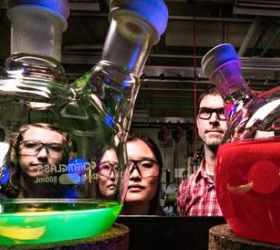
Perovskite has changed its status to single (cell)
In another breakthrough for the material so many solar advocates hope will replace traditional silicon in module production, a group of scientists in China and the United States have produced the first monocrystalline perovskite cell, which could accelerate its acceptance as a silicon replacement.
