Engie launches tender to select innovative solar and storage technologies
The climate control unit of the French energy giant seeks proposals from start-ups and small and medium-sized enterprises. Bids must be submitted by July 4.

EPFL’s perovskite cell remains stable for over a year
A low-cost and ultra-stable perovskite solar cell, which was built by a team of scientists at Switzerland’s Ecole Polytechnique Fédérale de Lausanne (EPFL), has been operating at a constant efficiency of 11.2% for over a year with no performance loss.
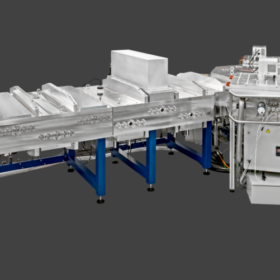
INDEOtec to supply PECVD tool to Fraunhofer ISE
Swiss equipment provider INDEOtec announced that it has received an order for its OCTOPUS II PECVD system from the renowned Fraunhofer Institute for Solar Energy Systems (ISE) in Germany.
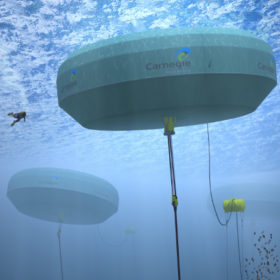
Carnegie completes plans for Mauritius wave, solar + storage microgrid
By Sophie Vorrath Carnegie Clean Energy’s plans to use its world-leading CETO wave energy technology to develop a renewable energy microgrid for the island Republic of Mauritius are beginning to take shape, with the completion of plans for stage one of the hybrid power station. The ASX-listed company said on Monday it had completed the […]
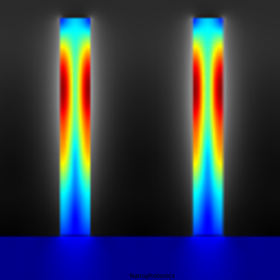
Sol Voltaics moves toward commercialization for GaAs film solution
Swedish materials company Sol Voltaics announced that it has successfully produced gallium arsenide (GaAs) nanowires, bringing its efficiency boosting film a step closer to commercialization.
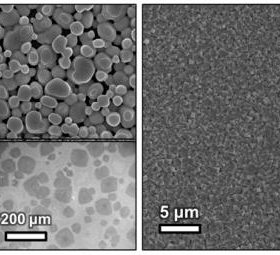
Russian researchers develop process for crystalline perovskite film
A research team at Lomonosov Moscow State University has developed a new process to obtain organic/inorganic crystalline perovskite films for solar cells. The team says that the process allows for the development of compositions with optimal stability, and that it’s discovery could give fresh impetus to the research into perovskite solar cells.
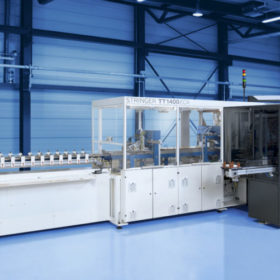
Teamtechnik & research partners develop award winning lead-free PV system
A joint project conducted by the Carinthian Tech Research Center and the Austrian Institute of Technology, in conjunction with German equipment manufacturer teamtechnik has developed a lead-free PV system using glued ribbon technology.

Penn State researchers develop low-cost solar cell
A research team at Penn State University has developed solar cells of up to 17% efficiency using a simplified concept requiring only one semiconductor material. Thanks to their potential for low-cost production, the researchers theorize that the cells could be used to provide power to energy poor communities the world over.

ANU researchers develop light management technique inspired by butterfly wings
Researchers at Australia National University have developed a nanostructure technique to finely control the direction of light. The technique, says ANU, could be applied to tandem perovskite/silicon solar cells.
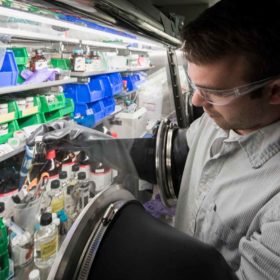
NREL develops controllable quantum dot systems
Researchers at the United States National Renewable Energy Laboratory (NREL) have developed a new designer quantum dot system, which allows for greater control over optoelectronic properties of the materials.
