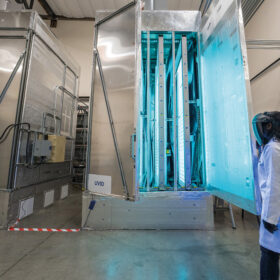
Module quality on the edge
Module manufacturers have struggled for more than two years with oversupply and prices often falling below production cost. Cost-cutting measures – such as reduced encapsulant thickness, thinner glass and thinner frames – can have widespread impacts on initial module quality and long-term performance. Recent test results for commercial products are raising concern.
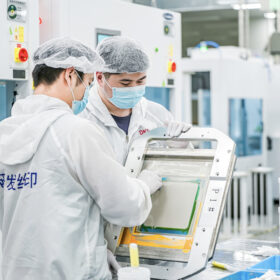
Copper contender
Copper metallization is emerging as one of the most closely watched technological shifts in solar cell manufacturing as producers seek to reduce costs and dependence on silver. Pure-copper metallization, whether in screen printing or plating, remains far from gigawatt-scale realization, but more companies are dipping their toes into the transitional step of hybrid silver-copper solutions.
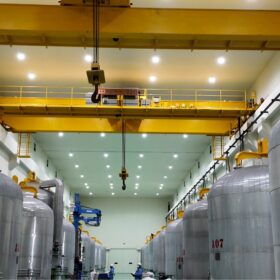
Ramping up for global poly demand
February 2026 marked the start of production at United Solar Polysilicon’s (USP) new polysilicon factory in the Sohar Port and Free Zone of Oman. As the factory ramps up to its full 100,000 metric tons (MT) of capacity, pv magazine spoke with USP chief financial officer Binyam Giorgis about how a polysilicon factory at this scale outside China could influence the global solar supply chain, and the challenges it will face in ramping up and securing long-term demand.
Tolling takes off in Europe
Tolling was the fastest-growing BESS revenue structure in 2025, according to Modo Energy. The benchmarker’s European BESS 2025 report, published in March 2026, recorded 15 publicly announced deals, up from just three in 2024. Germany and the United Kingdom were the top markets for offtake agreements, followed by Italy and France.

Even flow
Flow batteries remain a niche technology and struggle to compete on an upfront cost basis with lithium-ion (Li-ion). But demand for long-duration energy storage (LDES) solutions from large energy users presents a compelling use case for flow batteries, proponents argue.

Graphene coatings for grid-scale BESS
Chicago-based startup Volexion makes drop-in graphene coating technology for commercial lithium-ion cathode materials used in electric vehicles (EVs) and standalone grid-scale storage. CEO Joe Adiletta told pv magazine he is dealing with international customers and partners, including cell manufacturers interested in the solution as an alternative to conventional cathode coating materials.

On the road with pv magazine
Meet the pv magazine team around the world in April and May 2026.
