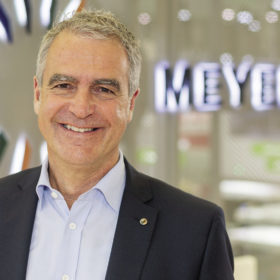
“It’s not surprising, we are starting to feel the momentum”
Meyer Burger looks set to return to profit in the first half of 2018, for the first time in several years. pv magazine caught up with Hans Brändle, CEO of the Swiss equipment manufacturer, to discuss the latest developments on the equipment supply landscape in 2018.
Green power replaces black in India
Over the next 10 years, solar is expected to account for a whopping 170 GW of the 275 GW of new generating capacity added to India’s grid. Tim Buckley, Director of Energy Finance Studies, IEEFA, sets out the role policy has played in delivering the transformation.
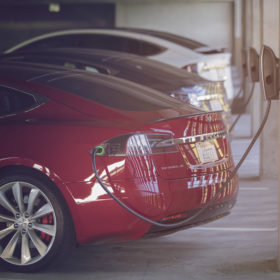
Cryptos & watts – good bedfellows
Last year, blockchain stole the show in the digital assets ecosystem, showcasing a myriad of ways to revolutionize energy infrastructures. The sector has been exploring the software’s potential to securely track and exchange data. In 2018, SolarCoin and P2P energy trading platforms are some of the blockchain applications energy players will be keeping a close eye on.

Building a successful ecosystem
India’s government must create a complete ecosystem to ensure the effective on-ground execution of its ambitious solar program, says Chakradhar Byreddy, Director Renewable Energy, UL, Asia Pacific. This includes investing in laboratory infrastructure and skills for technical due diligence, energy yield assessment, and forecasting.
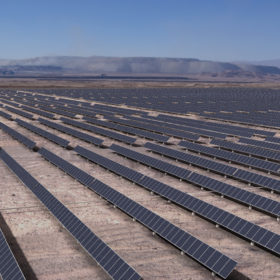
Immunizing Latin American PV
While Latin America’s PV markets are not immune from the most common quality issues related to PV products and projects, extensive track records or statistics on cases of poor quality are difficult to come by. A few international and local entities operating from Chile to Mexico are currently dealing with product certification, international standards, and research on specific cases. This, however, is not enough to improve conditions for more quality in all markets.

“Now, the Japanese government regards renewables as a major energy source”
Japan is expected to install 6-7 GW in 2018, an impressive feat in the face of a decreasing FIT, cancellation of approved projects, and a sluggish start to its tender program. Here Izumi Kaizuka of leading Tokyo-based market research agency RTS Corporation gives an update on the latest developments in Japan’s PV market.

“Not ambitious but necessary”
Karl-Heinz Remmers was already a well known figure in the German PV industry when he founded pv magazine global ten years ago. Since then, the industry has changed dramatically in terms of price, geographies, manufacturing and sophistication. But would he do it all again?

FERC, capacity markets, and state policy
Energy Innovation’s Robbie Orvis discusses the potential impacts of recent decisions by the Federal Energy Regulatory Commission (FERC) on U.S. solar and wind markets, and what we can expect in the future.

Sungrow: Floating PV creates ripples in South-East Asia
Floating PV systems have seen their dawn in South-East Asia and China in particular. Densely populated regions, resulting in high land prices and a comparatively high availability of otherwise not used water bodies made this solution and eyecatcher for many PV developers in the regions. At Intersolar Europe in Munich pv magazine met with a big fish in the floating PV field to talk about this new market.
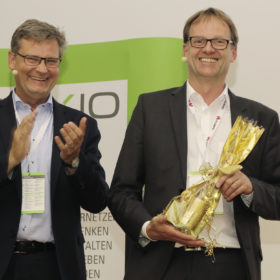
“It is very accurate”
The number of SMEs in the solar sector that can claim three decades of experience is relatively small. Valentin Software, the provider of the PVSol platform, is one such company. And in its 30th year, Steffen Lindemann, Managing Director of Valentin says that the role of software in combining PV into an integrated energy system is continuing to grow.
