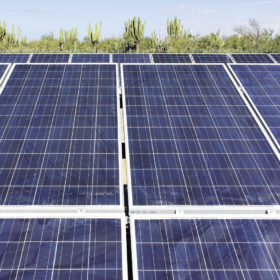
Gulf of expectation
Although new terms of investment and government targets have been introduced in Mexico and investor confidence in the country’s PV sector appears to be cautiously increasing, the turnaround is likely to be steady rather than spectacular, writes Neil Ford.
Sustainable capital in a shifting landscape
As the impacts of US energy policy upheaval begin to spread, new capital structures are emerging. In the short term, developers will race to finish projects to qualify for federal incentives being removed on an accelerated timeline. pv magazine spoke with Trenton Allen, CEO of Sustainable Capital Advisors, who sees this period as an opportunity to build momentum that will endure beyond the policies that supported it.
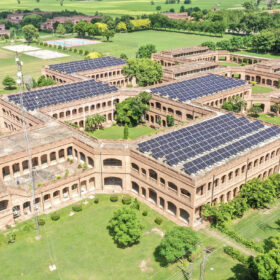
Taking the next step in Pakistan
Surging solar module imports in Pakistan made global headlines in 2024, but where has all that capacity gone and what does it mean for the country’s wider energy sector? Industry experts and analysts in Pakistan tell pv magazine about the challenges that persist, as well as the opportunities for solar and storage in a nation with significant electrification potential.
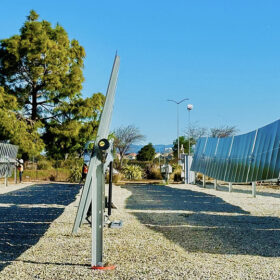
Safely stowed
Hail damage has become a real headache for project developers in the United States, where growing deployment has increased exposure to weather-related risk. As project owners seek to limit the impact of hail on their bottom line, innovations in tracking systems and insurance can help.

The climate gap in PV financing
Some in the energy sector have suggested that a changing climate might actually be a blessing for solar power, claiming that higher temperatures will come with more sun, hence more energy. That may not be the case. Everoze Partner Nicolas Chouleur and climate expert Alberto Troccoli dive into the findings of a study conducted under the Copernicus Climate Change Service Enhanced Energy Service.

Storm-proofing your PV data
Extreme weather is no longer a rare event for PV sites across the United States. It’s a costly, recurring reality eroding performance, reliability, and profitability. Wayne Burnett, chief strategy officer and chief technology officer at sensor equipment supplier EKO Instruments, offers insights from projects in hard-hit regions. With lessons learned from the US, Europe, Asia, and the Middle East, he examines how these are shaping best practices for long-term energy yield and resilience.
Can BESS answer US data center power demand?
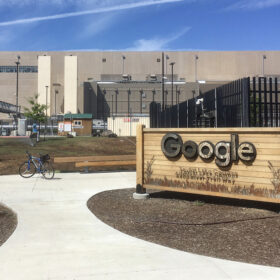
Data centers’ energy demand is well-documented. Hyperscale AI data centers owned by big-tech companies are placing acute strain on energy infrastructure in the United States, the global data center capital, and many more are expected to come online. There is ongoing debate about how policymakers, grid operators, regulators and the energy industry – renewable or otherwise – can respond to the situation. Battery energy storage systems (BESS) can provide grid-balancing solutions, but not all are convinced they can fully replace gas.
The fast and the fair
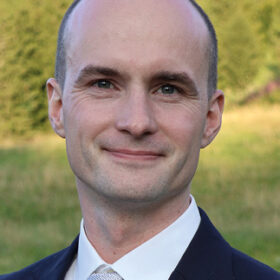
The Fast and Fair Renewables & Grids Initiative creates a framework to involve local communities in the development process for renewable energy and grid infrastructure projects. Launched in 2025 by the European secretariat of Local Governments for Sustainability (ICLEI), the initiative’s principles have now been published. pv magazine spoke with Arthur Hinsch, an ICLEI Europe sustainable energy systems expert, about the initiative and its aims.
‘This group of people is not going to be thwarted’
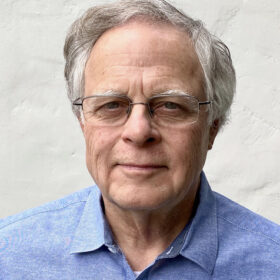
Dick Swanson has left his fingerprints all over the modern solar industry. He is widely known for spreading the word on solar’s impressive learning curve with what has become known as Swanson’s Law, for developing the interdigitated back contact (IBC) cell, and for founding SunPower. In June, Swanson was named 2025 IEEE Photonics Society Aron Kressel Award Recipient and spoke with pv magazine to reflect on his work.
pv magazine Awards: Inverters
Inverters are critical to the efficiency, performance and safety of solar installations across all segments. From residential arrays to utility-scale solar farms, investing in the right inverter for the job can impact how long it takes to secure a return on investment.
