No time to stand still
Magazine director Mark Hutchins introduces the November 2025 edition, in which we take a closer at the causes and impacts of the April blackout that hit Spain and Portugal.
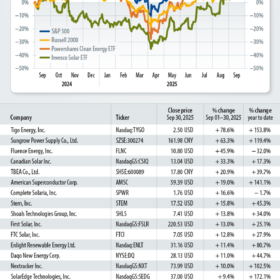
Solar gains but tariffs loom
September was a strong month for US solar stocks, with the Invesco Solar ETF (TAN) outperforming leading stock indexes. However, forthcoming action on polysilicon imports could increase cost pressures on solar developers, as Jesse Pichel of Roth Capital Partners explains.

Where is PV going?
Two months of module price volatility have brought mixed fortunes for different technologies, leaving global PV market forecasts uncertain. As European leaders debate energy policy changes, Martin Schachinger of pvXchange examines global PV trends through the lens of German politics.

Shedding light on the Iberian blackout
The panel of experts created by European grid operator ENTSO-E to investigate the blackout that left most of mainland Spain and Portugal without power for several hours on April 28, 2025, has published a comprehensive report on the events leading to the incident: pv magazine España’s Pilar Sanchez Molina examined the report, which fundamentally aligns with the earlier official account of the incident presented by the Spanish government.
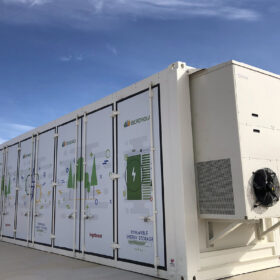
Opportunity knocks for storage in Spain
Energy storage in Spain is on the verge of big things. Some have long been betting on this development, while new entrants are eagerly eyeing Spain’s energy storage potential. Luis Marquina, president of Spanish battery storage association Aepibal, warns that for those who still don’t see the opportunity, the train may only pass once.

Sodium not quite a li-ion tamer
A new generation of sodium-ion (Na-ion) battery cells has been launched as an alternative to the virtual monopoly of lithium-ion (Li-ion). Although the technology is unlikely to displace significant Li-ion market share, recent improvements make Na-ion a viable solution for certain niche applications, with potential for wider usage if cost becomes competitive.
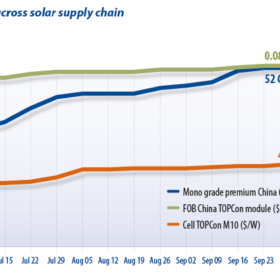
Polysilicon price push
Firm action to address overcapacity in China’s PV supply chain is expected soon, and that prospect alone has been enough to nudge prices upward. Meanwhile, global trade is becoming more complex as India and the United States mull stronger restrictions on PV imports.
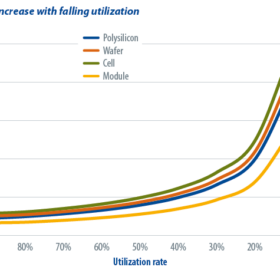
Vertical integration strategies in the PV supply chain
In 2023, InfoLink published an analysis of vertical integration trends in the PV supply chain, concluding that the industry would adopt more diverse and flexible approaches – a view reinforced by current market dynamics.
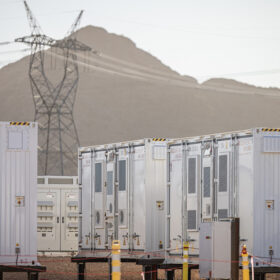
Demand diligence from US battery integration
Tariffs continue to reshape the US storage market. Rising costs for overseas systems have created new incentives to integrate equipment domestically, and many developers are turning to US firms to assemble battery systems. Integration capacity can scale faster than battery cell manufacturing, but not without risk. Unlike cell plants, where automated processes keep variations in check, battery assembly and integration depends on people, as Jeff Zwijack from Intertek CEA explains.

Adapt to thrive
Residential solar in the United States is in a sustained downturn as policy support shifts in key states, with conditions likely to worsen as federal tax credits near expiration. Companies in the sector now depend on cutting costs, expanding products and services, and innovating with customer financing to stay competitive.
