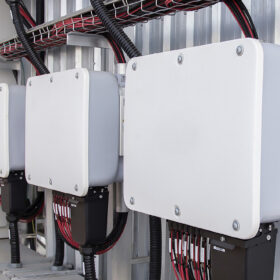
Improving inverter design
Inverters must withstand the high levels of heat generated when operating, otherwise system performance and reliability could be at risk. Cody Schoener of Dow Performance Silicones argues using silicone-based materials for inverters can improve thermal management and fire protection, while offering thermal stability, environmental resistance, electrical isolation and support for operational efficiency.

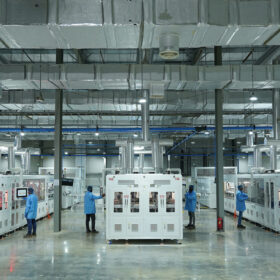
Equipping a new supply chain
With oversupply and policy uncertainty putting the brakes on solar manufacturing expansion across most of the world, India is now the only active market for many PV manufacturing equipment suppliers concentrated in China. pv magazine spoke with Inderjit Singh, founder and managing director of Indygreen Technologies, a New Delhi-based company that operates as a bridge between Indian manufacturers looking to scale up their operations and equipment suppliers which currently have few other markets to serve.
India’s changing cell import policy
India has rapidly emerged as one of the world’s most prominent PV markets, driven by policy support and rising domestic electricity demand, with solar becoming the core of its energy transition. InfoLink Consulting’s Jonathan Chou examines the adjustments and localization process of India’s PV industry by analyzing import data for cells and modules.

pv magazine Awards: Sustainability
There is more to sustainability than clean power. Environmental concerns extend across the solar and storage industry, from sourcing raw materials to end-of-life treatment. Investors, planning departments and local communities increasingly want to know the full impact of new projects.
Thankfully, pioneers from across the industry have made great strides in bolstering the sustainability credentials of solar and storage. These efforts should be recognized, which is why the pv magazine Award for Sustainability celebrates businesses, organizations and individuals who have taken concrete steps to support a green transition.

In the balance
Already, 2025 is turning out to be the year in which energy storage takes a front seat ahead of solar and related matters, in our minds if not yet in installation figures.

Bankrolling C&I solar deployment
UK distributor Segen has European ambitions and a global banking partnership that gives it scope to offer solar financing to commercial and industrial (C&I) consumers in international markets. The distributor’s Head of Solar Financing EMEA James Walker explains what its partnership with BNP Paribas has to offer for installers and C&I customers.
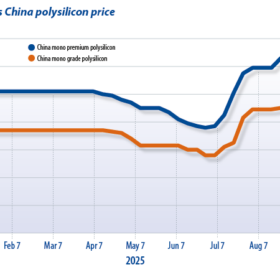
China’s balancing act
China’s downstream solar market is showing early signs of recovery, lifted by a wave of recent policy announcements and a decisive shift toward stricter regulatory enforcement. OPIS analyst Brian Ng examines the early impacts of new production and pricing controls in the upstream sector.

pv magazine test: August 2025 results
George Touloupas, vice president of ESG and new services at Clean Energy Associates (CEA), and Huatian Xu, director of technology and quality, analyze the August 2025 results from the pv magazine test outdoor installations in Yinchuan, China, and Dammam, Saudi Arabia.
On the road with pv magazine
Key industry events in October 2025, and your chance to meet with the pv magazine team around the world.
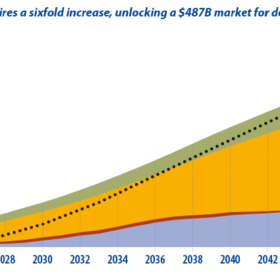
Battery boost needed to solve India’s energy gridlock
India has made significant strides toward its goal of achieving 500 GW of non-fossil fuel generation capacity by 2030. However, this progress could be undermined if more focus is not placed on the integration of renewables. Rystad Energy analyst Uttamarani Pati examines India’s progress on storage and transmission upgrades.
