
Layering potential
Germany’s M10 Industries AG and Fraunhofer Institute for Solar Energy Systems (ISE) first presented their shingled cell matrix technology in 2021. A few months later, M10 teamed up with Zahoransky AG, an automation equipment supplier. Their joint venture M10 Solar Equipment aims to industrialize shingle matrix technology for the mass market. To find out more about market prospects for this technology, pv magazine spoke to M10’s technology and sales manager, Nils Klasen.

pv magazine Awards: Manufacturing
Each year, the solar industry proves its innovation chops with an impressive offering of new and exciting products engineered to improve performance. While China’s domination of manufacturing continues, there are plenty of disruptors from other countries introducing unique products.
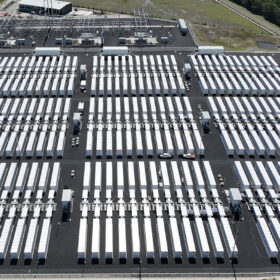
Big batteries boom Down Under
Australia is the third-largest market worldwide for large-scale energy storage by capacity and is blitzing the field in per capita battery storage installations, with more than 1 GWh per million people – double that of nearest rival the United Kingdom. With a current approximate capacity of 14 GW and a pipeline of 154 GW, the outlook remains strong. In the wake of coal-fired power plant closures, utility-scale batteries are rising to the challenge of guaranteeing network reliability, as pv magazine Australia’s Ev Foley reports.

Re-assessing the cost
Renewable energy (RE) in India is set to become costlier, writes Crisil’s Sehul Bhatt, as the government begins a phased withdrawal of a waiver on charges for connecting to the country’s inter-state transmission system (ISTS).
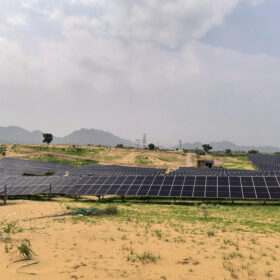
Scaling solar faces realities on the ground
Large-scale solar projects in India face challenges from land constraints to harsh climates and technical losses. pv magazine India’s Uma Gupta explores five key roadblocks and how installers are navigating around them.

India’s agrivoltaics revolution
India’s energy transition and its agricultural future are deeply intertwined. The government wants 500 GW of fossil fuel-free electricity generation capacity by 2030, while doubling farmers’ incomes at the same time. These priorities are rarely discussed together, but agrivoltaics has the potential to put farmers at the core of India’s clean energy strategy.

New obligations for solar and storage
As renewable energy deployment accelerates, the industry falls under an intensifying spotlight. Developers and financiers face mounting pressure to prove credible environmental, social and governance (ESG) compliance across the solar and battery storage value chains.

Scaling storage in India
India is demonstrating real ambition when it comes to building out energy storage capacity sufficient to support hundreds of gigawatts of solar before 2030. Establishing a domestic battery supply chain is another long-term goal for the country, but India’s energy storage industry should focus on fundamentals like pack assembly and energy management systems before moving into upstream manufacturing, Vision Mechatronics Managing Director Rashi Gupta told pv magazine.
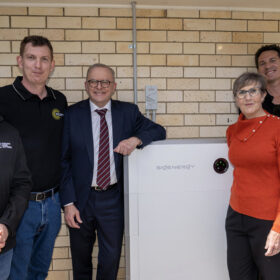
Australia’s consumer energy boom
Millions of Australian households with rooftop solar are now rapidly adding batteries to maximize their generation and regain control over escalating power bills. This is energy democracy in action, writes Tim Lamacraft, general manager at the Smart Energy Council, who points out that batteries are becoming a key fixture of Australia’s decarbonization roadmap.
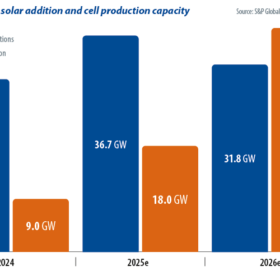
Indian solar enters a new phase
India’s solar sector is moving from headline growth to a more complex phase where record installation volumes, burgeoning domestic module capacity, and emerging trade frictions interact. In the first half of 2025, S&P Global’s Baldesh Singh observed a step-change in deployment: solar dominated renewable additions and helped push clean generation to new heights. While the sector continues to grow, the same export and trade dynamics that were previously advantageous for manufacturers now pose near-term risks to merchant revenues, global market access, and long-term project economics.
