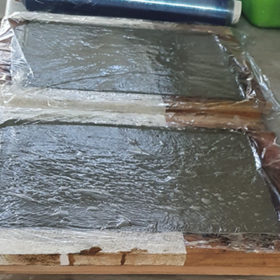
Reflective coating to reduce solar tile temperatures
Australian scientists have tested different reflective coatings in solar tiles and have found that they could improve the performance of building-integrated PV devices by up to 6.6%. They are currently working with building product manufacturers to bring their tech closer to commercial production.
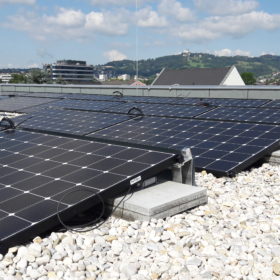
DC rooftop PV providing domestic hot water to residential building at 60 C
Domestic hot water, with a heating system powered exclusively by DC solar power, has now covered the needs of an apartment building in Linz, Austria, for a period of a year. The 14 residential units are each connected to their own 1.36 KW solar arrays.

The mobility rEVolution: Novel anode material paves way for 15-minute EV charging
US researchers have developed a novel fast-charging battery anode material, and GM has revealed a new focus on battery R&D. The European Parliament, meanwhile, has issued a number of proposals for alternative fuels infrastructure.
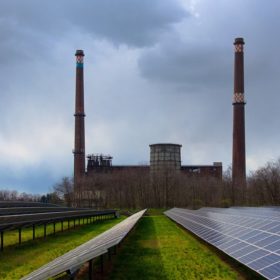
Bulgarian grid operator reviewing connection requests for 24 GW of renewables
The Bulgarian grid operator says the nation urgently needs to expand its grid to accommodate planned renewables capacity. It is now holding meetings with potential investors.

Ireland introduces planning exemptions for rooftop solar
Ireland’s new solar measures, first announced in June, are expected to facilitate deployment in the residential and commercial PV segments.

Hurricane Ian barely affects solar community in Florida
Babcock Ranch, a community near Fort Meyers, Florida, was built with climate resiliency in mind.
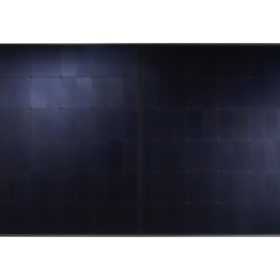
FuturaSun unveils 425 W n-type IBC solar module for rooftop applications
FuturaSun has revealed plans to expand its production capacity in China and its home market, Italy. Its new all-black solar panel features a power conversion efficiency of up to 21.60%.
Why do solar power plants work inefficiently?
When choosing a solar power plant, individuals and businesses pay the most attention to its power – after all, this will determine how much electricity will be produced. Other equipment, systems and sensors that allow monitoring and analysis of the operation of the power plant are often underestimated. But they shouldn’t be: the solar power plant will be used for several decades, so various failures and poor-quality monitoring can have a significant impact on the efficiency of electricity production.
Brazil hits 20 GW milestone
Brazil has deployed 6.52 GW of cumulative utility-scale solar and 13.57 GW of distributed-generation PV projects below 5 MW in size.

Philippines introduces priority dispatch for renewables, opens market to 100% foreign investments
The government of the Philippines has introduced a new preferential dispatch policy for renewable energy in the country’s wholesale electricity spot market. It has also started to amend the Renewable Energy Act to remove a 40% ownership cap on foreign investments in clean energy projects.
