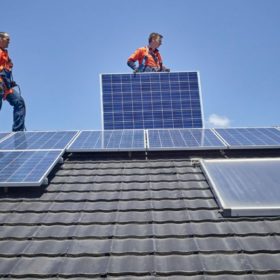
Nearly 4% of US homes have rooftop solar installed
In 2020, 3.7% of US homes generated electricity from small-scale solar arrays, reports the US Energy Information Administration.
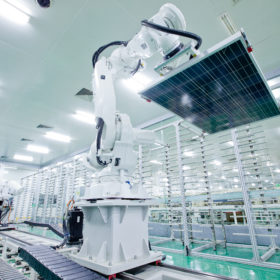
Jinko Solar reports higher sales, profit in Q3
Jinko Solar recorded a higher profit in the third quarter of 2022, as sales of its solar panels surpassed 10 GW. The Chinese PV module manufacturer said it now wants to ramp up production to keep pace with rising global demand.
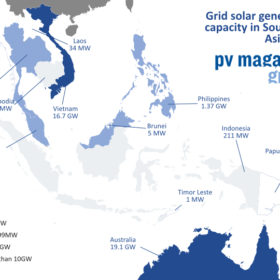
Weekend read: Southeast Asian interconnection
While near neighbors, the electricity generation of the countries of Southeast Asia couldn’t be further apart. Indonesia burns locally mined coal; Malaysia has reserves of oil and gas; and populous Singapore, Vietnam, and the Philippines depend on fossil fuel imports. They could all benefit from increased solar electricity but higher grid capacities and interconnection are key for an opportunity to unlock the power of the sun.
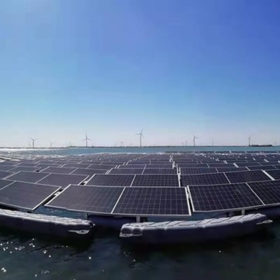
Floating solar combined with wave, tidal, wind power
A consortium of Singaporean universities and companies will study the feasibility of integrating a hybrid floating solar project with ocean, tidal, and wind capacity. If successful, the parties plan to deploy a pilot system with at least 100 MW of renewables capacity.
优睿科.jpg-280x265.png)
Latest advances in sodium-ion battery research
Qingdao University researchers have synthesized high-performance titanium dioxide-based anode materials with excellent cycling stability, while German scientists have used operando techniques to observe how solvated sodium ions embed themselves in electrodes.
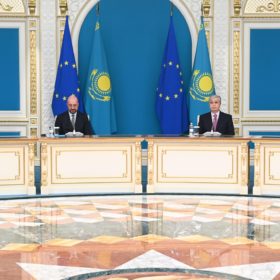
The Hydrogen Stream: Svevind to invest in 20 GW of electrolysis capacity in Kazakhstan
A unit of Svevind has signed an agreement to invest up to $50 billion in a project on the Caspian Sea that could produce up to 2 million tons of green hydrogen per year. Stellantis, meanwhile, has revealed plans to mass produce light commercial hydrogen vehicles.
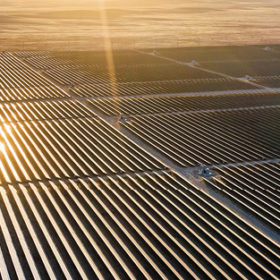
Annual added PV capacity will more than quadruple to 650 GW in 2030, says IEA
The International Energy Agency (IEA) has published its “World Energy Outlook 2022” report. It expects the energy crisis triggered by Russia’s invasion of Ukraine to accelerate the global energy transition.
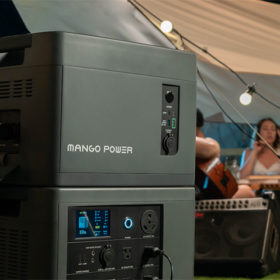
Mango Power unveils home and portable battery system
US-based Mango Power has developed a 3.5 kWh battery system that can be expanded up to 14 kWh. The product features LFP battery cells from CATL and can be charged through AC wall outlets, with solar panels, or via electric-vehicle chargers.
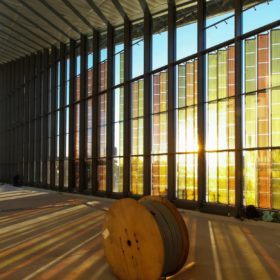
EPFL sets new efficiency record for dye-sensitized solar cells
Scientists at EPFL in Switzerland have achieved a new efficiency record for dye-sensitized solar cells. The group reported 15% efficiency in direct sunlight, and up to 30% under ambient light conditions. Their key achievement was the development of a new combination of photosensitizer materials that can absorb the entire light spectrum.
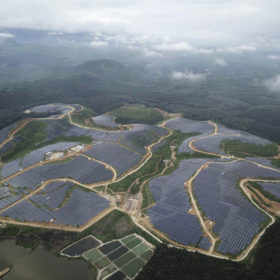
Malaysia to grant 4-year PPA extensions to bidders in large-scale solar tender
The Malaysian authorities have revealed that they will extend power purchase agreements from the fourth LSS4 tender for large-scale PV from 21 to 25 years.
