
Turkey’s 1 GW PV tender attracted, so far, a lowest bid of $0.0257/kWh
The Turkish Ministry of Energy has completed, thus far, only the tender’s first 300 MW tranche, and the three winning bids ranged from $0.0257/kWh to $0.0293/kWh
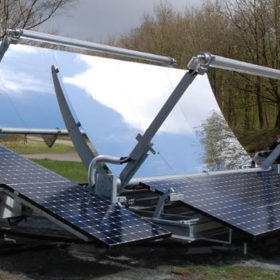
Concentrating solar power system for building applications, usable with PV
Conceived by a German start-up, the system is claimed to achieve a 75% efficiency in converting direct radiation into heat. It may be either equipped with solar trackers or photovoltaic modules, which would both occupy the same space on the front and lateral sides of the installations.

Photovoltaics for electric cooling
According to new research from Sweden, solar PV might be cost-competitive in powering electric cooling for an investment cost ranging from $165/kW to $480/kW in hot-climate countries such as Brazil, Spain, India and China, among others. The study focused on the cooling demand for the residential sector, where most of it is expected to originate.
Germany allocates 1.08 GW of solar in PV tender
The tender concluded with a final average price of €0.0519/kWh, which is slightly higher than the €0.050 reached in the previous procurement exercise of the same kind. Bids ranged from €0.0405 to €0.055/kWh.
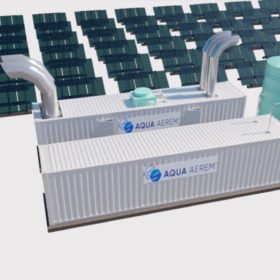
Massive Australian green hydrogen project moves forward with new Japanese partner
Water-from-air technology company Aqua Aerem’s Desert Bloom green hydrogen project received Major Project Status from the Northern Territory government last year. It has now announced a partnership with Japanese energy giant Osaka Gas that not only brings the 10 GW project closer to reality, but has also seen the company boost its ambitions to 20 GW in light of “quickly developing demand.”
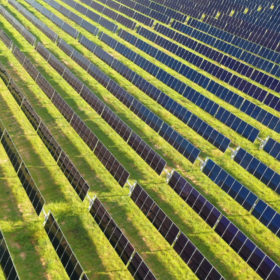
First Solar bags two module orders totaling 4.75 GW
The US manufacturer secured this week two solar module supply deals from Origis Energy and Silicon Ranch, respectively.
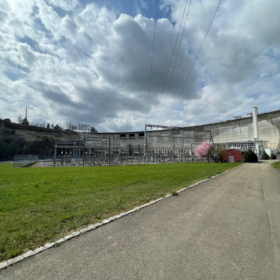
Hydro-powered hydrogen production in Switzerland
Groupe E will build an $8.5 million hydrogen production facility in the Swiss canton of Fribourg, featuring two polymer electrolyte membrane (PEM) electrolyzers provided by H-Tec Systems.
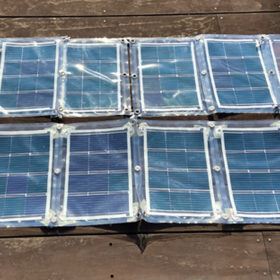
NGK Insulators enters perovskite PV module business
NGK Insulators has invested an undisclosed sum in Enecoat, which develops perovskite solar cells via a wet process based on organic chemistry, a low-temperature coating process, and roll-to-roll printing.
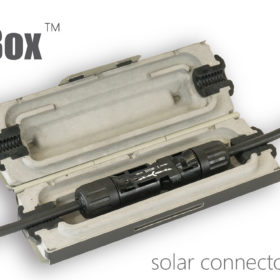
Fire safety box for solar connectors
Viridian Solar says that its ArcBox enclosure can be easily snapped around the outside of an MC4 electrical connector. It contains a DC arc within the connector, which prevents fire from spreading to nearby combustible materials.
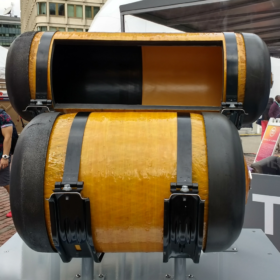
UK government warns of global warming risks related to hydrogen leaks
The UK Department for Business, Energy and Industrial Strategy has published new research showing that hydrogen leaks could have an indirect climate-warming impact, partly offsetting efforts to reduce carbon dioxide emissions.
