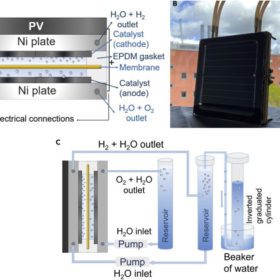
Thermally integrated PV-electrolyzer with 9.1% solar-to-hydrogen efficiency
A Swedish research group has developed a device combining CIGS thin-film solar modules and an alkaline electrolyzer based on a trimetallic cathodic catalyst made of nickel, molybdenum, and vanadium (NiMoV) and an anode made of nickel oxide (NiO). The electrolyzer achieved an average solar-to-hydrogen (STH) efficiency of 8.5% for stable operations during 100 hours.
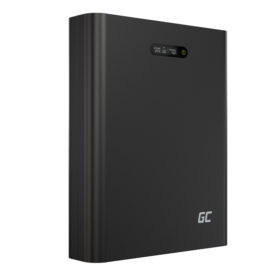
Green Cell unveils 5kWh residential battery
Called GC PowerNest, the battery has a storage capacity of 5kWh and a voltage of 51.2V. It is scalable in an eight-stack configuration, thus reaching a capacity of up to 40kWh.

Japan allocates 268.7MW in eleventh solar auction, lowest bid comes in at $0.078/kWh
The procurement exercise was open to PV projects exceeding 250kW in size and had a ceiling price of ¥10.25/kWh ($0.089).
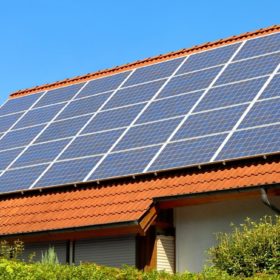
Mini-PPAs for residential PV in Germany
German renewable energy producer Trianel plans to buy solar power from residential PV systems via mini power purchase agreements, starting from the second quarter. It will then sell the electricity to the energy futures market.

Canadian Solar claims to be king of Italian solar
The Chinese-Canadian company has secured the signature of Swiss energy business Axpo as offtaker for around 109GWh of solar electricity over a decade, with the clean power to be produced at Canadian Solar projects in Lazio and Sicily.

Cybersecurity for distributed energy, inverter-based resources
UL and the US National Renewable Energy Laboratory have released a report on cybersecurity certification recommendations and are actively developing new requirements to create cybersecurity certification standards.

The Netherlands deployed 3.3GW of PV last year
The country’s cumulative installed PV power reached 14.3GW at the end of 2021.

The EU plan to drastically ramp renewables to replace Russian gas
The European Commission yesterday announced its intent to remove demand for two-thirds of its Russian gas supply in less than nine months and hugely accelerating the rate of solar deployment is a central part of its radically raised clean energy ambition.

Italy installed 937MW of solar, 431MWh of storage in 2021
The country’s cumulative PV capacity reached 22.56GW at the end of December.
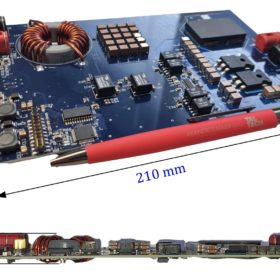
Novel power electronic converter for BIPV
Conceived by researchers in Estonia, the device is claimed to be compatible with both crystalline silicon and thin-film BIPV panels and to manage, easily, different voltage levels. It can be applied either in solar facades or BIPV rooftop arrays.
