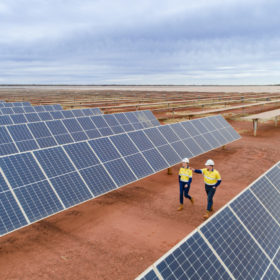
Alinta switches on Australia’s largest remote solar farm
In an Australian first, up to 100% of daytime operations at two major iron ore mines have been powered entirely by renewable energy, as utility Alinta Energy has switched on the 60 MW Chichester Hub Solar Farm in Western Australia’s Pilbara region.

US House unanimously passes forced labor bill for China’s Xinjiang region
The Uyghur Forced Labor Prevention Act would ban all imports from China’s Xinjiang region, unless the US government determines that products were not made with forced labor. The region supplies about 50% of the world’s polysilicon, which is an essential material in solar PV.
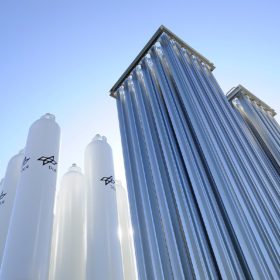
PV-powered hydrogen could already hit LCOH of €6.23/kg in Germany
Green hydrogen can now compete with hydrogen produced with fossil fuels in Germany, according to new research. Scientists have looked at six different scenarios for alkaline and PEM electrolyzers and identified alkaline devices powered by grid-connected PV as the cheapest option.

Fimer, Enie to set up inverter factory in Algeria
The Italian inverter maker and the Algerian electronics manufacturer are joining forces to produce solar inverters in Algeria. The location of the planned manufacturing facility was not disclosed.

European Commission suggests zero-emission building mandate for 2030
The proposed measure, which will now pass to the Council of Ministers and European Parliament for debate, would further the adoption of PV, according to SolarPower Europe, especially if the commission’s proposal it be applied to public sector structures from 2027 is adopted.

Irish utility plans to have 58 MW of solar generating next year
French clean power company Neoen, part of the Paris-headquartered Impala conglomerate, is constructing three Irish solar plants with a total generation capacity of 58 MWp and has secured an agreement from Bord Gáis Energy to buy the electricity they will generate.
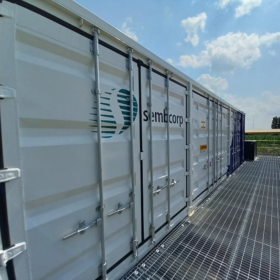
Sembcorp builds 360 MW battery in the UK
Once deployed, the battery will be Europe’s largest storage facility.
German PV equipment providers keep recovering, but uncertainties remain
German engineering association the VDMA has reported increasing orders and sales for PV equipment suppliers in the third quarter. China accounted for around 80% of PV production equipment demand during the period.
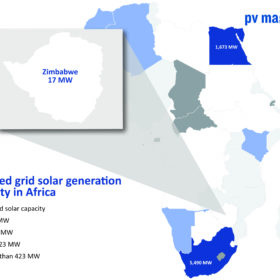
South African-owned miner confirms 185 MW solar plan for Zimbabwe
Platinum miner Zimplats will spend $200 million on 185 MW of solar plants to power operations to help seal approval for its capital spending plans by the Zimbabwean government and to make up for deficiencies in local electricity supply.
Plans for EV battery raw material supply in Iberia
The partners behind a JV aiming to develop a lithium conversion factory in Portugal say Iberia could supply enough geological feedstock spodumene to produce 700,000 EV batteries per year, starting in 2026.
