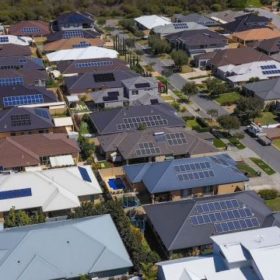
Australian start-up targets rooftop solar increase with new tech to manage grid stability in low voltage areas
Queensland company eleXsys Energy has secured more than AUD450,000 to help finance a trial of next-generation technology designed to manage grid stability in low voltage areas, potentially allowing for an increase in the amount of distributed energy resources, including rooftop solar, that can be connected to the grid.
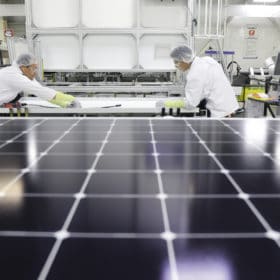
Maxeon extends IBC modules’ product, perfomance warranty to 40 years
The manufacturer said the 40/40 warranty is the longest and most comprehensive combined warranty offered in the photovoltaic industry to date. The product line is sold in most countries outside the United States and Canada under the SunPower Maxeon brand.
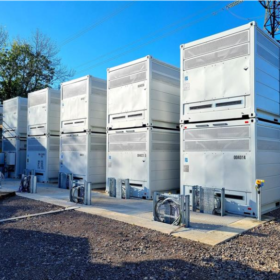
Canada’s largest solar-powered vanadium flow battery
Canadian companies Invinity and Elemental Energy are planning to couple a 21 MW solar plant under development in Alberta with 8.4 MWh of vanadium redox flow battery storage capacity.
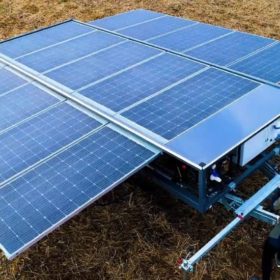
Solar trailer for off-grid applications from France
Developed by French start-up Ecosun, the trailer is equipped with 15 solar panels with output of 360 W and batteries with a storage capacity of 23 kWh. It can be used for construction sites, military camps and water pumping systems.

EU Commission holds firm on taxonomy – nuclear power, gas to be seen as sustainable
Brussels is ignoring the requests of some EU member states, including Germany, as well as the assessments of experts. The German government has spoken out clearly against including nuclear power and gas-fired power plants in the EU taxonomy.

Lithuania devotes €40 million for solar rebates in 2022
The Lithuanian government has decided to increase the 2022 budget for the solar rebates by €35 million after the initial phases of the program showed strong success among homeowners.

Solar for churches
Churches use energy mostly during the day, which makes them ideal buildings to deploy solar panels. Scientists in the United Kingdom have assessed the financial viability of a rooftop PV project for Bath Abbey and found that it could become profitable after 13 years.
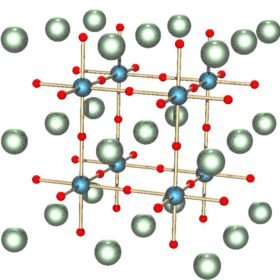
Perovskite solar cell with 24.18% efficiency via low-dimensional perovskitoids
Chinese scientists used perovskitoids as 1D and 0D capping layer materials for the cell’s perovskite layer. These materials enabled an effective and all-around passivation of the perovskite surfaces and grain boundaries, which prevents undesired Shockley-Read-Hall recombination and material degradation. The device achieved a power conversion efficiency of 24.18%, an open-circuit voltage of 1.151 V, a short-circuit current of 25.96 mA/cm2, and fill factor of 80.91%.
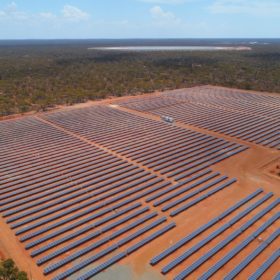
PV to deliver 100% renewables at Australian mine
Remote power generation specialist Zenith Energy will build upon its renewable energy options at Western Australian miner IGO’s Nova nickel site to demonstrate that it is possible to use 100% renewables to meet the demands of an operational mine site.
A battery is only as good as its control system
A possible failed bearing and a software programming error in a heat-suppression system caused a cascading incident that damaged 7% of Vistra Corp.’s Moss Landing Energy Storage Facility.
