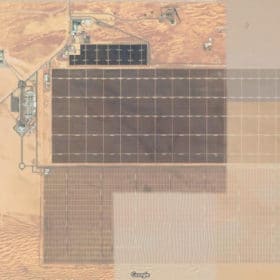
Mammoth Dubai solar park set to power water pumping station
The new facility is expected to be connected to the emirate’s water network this month.

pv magazine Roundtables Europe live coverage – Day 2
Welcome to the second day of the pv magazine Roundtable Europe event! Coming up this morning, is the cornerstone on Sustainability and Made in Europe, followed by the Innovation Hub: Hydrogen, battery storage, and e-mobility. Make sure you stay tuned!
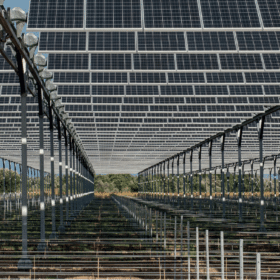
French PV companies set up agrivoltaics association
Sun’Agri, REM Tec, Kilowattsol and Altergie Développement et Râcines have announced the creation of France Agrivoltaisme, the world’s first association for the promotion of agrivoltaics.
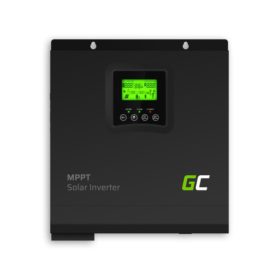
Green Cell unveils off-grid inverters for small residential buildings
Poland-based Green Cell is offering two versions of its new inverter, with power outputs of 1 kW and 3 kW. The inverters feature an efficiency of 90% and are recommended for small buildings such as cottages or year-round homes.

California explores real-time retail pricing to enable more renewables
California will need widespread demand flexibility to reach its renewables goal. Real-time electricity pricing is one tool that is being considered.

Australian PV system owners look at off-grid options amid talk of tariffs
Q Cells Australia says many residential solar customers are contemplating exiting the grid entirely as policymakers grapple with how to integrate small-scale renewables like rooftop solar PV and batteries into the electricity system.

Polish developer announces €225m green bond plan
The first batch of five-year investments, offered through German-owned Polish lender Mbank, will raise money to expand a solar portfolio R.Power claims already stretches to more than 4 GWp in its domestic market.

Netherlands allocates 3.53 GW of PV
The fall 2020 round of the Dutch SDE++ program awarded 75 MW of heat pumps and 310 MW of electric boilers to developers. About €2.12 billion of state funds will also be used to support a CO2 capture project that an international consortium is building in Rotterdam.

First Solar to add 3.3 GW of capacity in a new $680 million US factory
The 1.8 million-square-foot facility is projected to create 500 jobs and produce an enhanced thin-film PV module for the utility-scale solar market in the U.S.
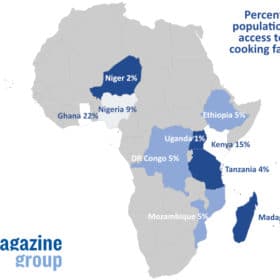
Universal electricity access by 2030 remains a distant dream
Energy efficiency, electrification of heating and transport, and the provision of clean cooking facilities are all going in the wrong direction as the Covid crisis deprived millions in sub-Saharan Africa of electricity use, according to a report by the IEA, IRENA, WHO, World Bank and UN Statistics Division.
