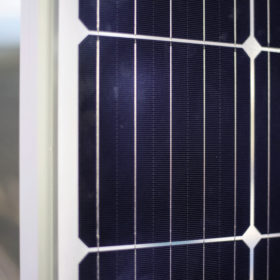
Inverted pyramid-based PERC solar cell with 21.4% efficiency
A Chinese research group has developed a PERC cell on a commercial 180-μm-thick monocrystalline silicon wafer with a standard size of 156 × 156 mm2. The cell has an open-circuit voltage (VOC) of 0.677 V, a short short-circuit current (ISC) of 9.63 A, and a fill factor of 80.30%.
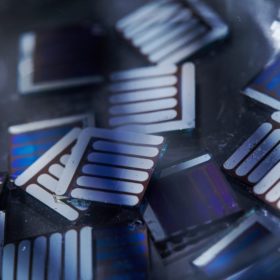
South Korea bets on tandem solar technologies
The South Korean government has released a new roadmap to support R&D activities in the solar sector. The document indicates the country’s solar manufacturing industry may be encouraged to opt for high-efficiency and expensive panels based on tandem solar cells.
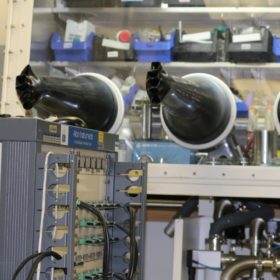
Solving a metal oxide mystery
An international group of scientists has discovered a ‘space charge’ mechanism that explains why certain metal oxides used as electrodes in lithium-ion batteries exhibit higher storage capacities than should be theoretically possible. The research, according to the group, will unlock new pathways to the development of more advanced energy storage systems.

Hydrogen economy needs public policies
According to the 2020 Global Gas Report by Snam, the International Gas Union and BloombergNEF, public policies are required to support clean hydrogen reach industrial clusters and to facilitate large-scale use. The authors of the report acknowledged the advantages of using wind and solar to directly power electrolysis, but they do not discard the possibility of using gas power with carbon capture storage. The experts of the three parties also identified barriers to remove for future development.
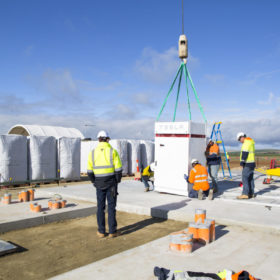
Neoen completes expansion of Tesla Big Battery in Australia
Neoen has successfully expanded the Hornsdale Power Reserve, otherwise known as the Tesla Big Battery, in Australia. If testing goes well, Hornsdale could start to function with an expanded remit of synthetic inertia services, which could have a big impact on regulatory changes.

Solar, storage-centric approaches to DC coupling
A new white paper by Alencon outlines the differences between PV-centric and battery-centric coupling.

Analysis: Initial results of Portugal’s solar+storage auction
Portugal’s recent PV auction marks a new era of battery storage for the country, says UK consultancy Everoze. It notes that the auction was so competitive that the winners had to cut their expected remuneration in the solar+storage category to negative values. It claims that the real winner is the government, as it is maximizing the value of scarce grid capacity, and argues that the auction could become a benchmark for nations with limited grid space.
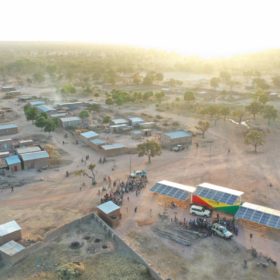
Senegal introduces VAT exemption for off-grid solar products
The Senegalese government is aiming to increase access to solar power in rural areas by reducing VAT on PV panels, inverters, solar thermal collectors and other products in an effort to achieve universal electricity access in the country by 2025.

Renewables-powered 25 MW electrolyser at Dutch port
The large-scale green hydrogen facility is being developed by Dutch energy company VoltH2 at the North Sea Port. The project is planned to be expanded to 100 MW.

EBRD may finance ACWA’s 200 MW solar plant in Egypt with $54 million loan
The $155,4 million project was secured by the Saudi energy giant through a tender held in 2019. The facility will sell power at a price of $0.02752/kWh.
