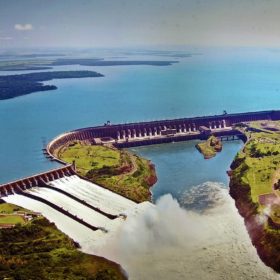
Floating PV to offset underperforming hydropower
Brazil now has 12 GW of underperforming hydropower capacity, according to U.S. researchers. Large-scale floating PV is an ideal solution to offset this shortfall, due to its high capacity factor, load correlation, and high potential output during periods of high demand.
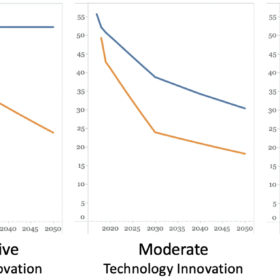
NREL’s PV cost projections plummet in new forecast
The lower projected costs for PV could help guide some utilities to plan for more PV capacity, as the utilities develop their long-term resource plans.
China could be preparing to settle unpaid subsidies mountain
In-country analyst the AECEA has speculated the authorities could be ready to wipe the slate clean for the start of the nation’s 14th five-year plan on January 1. The analyst has raised its solar expectations for the year but noted the sky-high price of polysilicon remains a concern for developers.

Chinese PV Industry Brief: GCL begins work on new polysilicon factory, GoodWe listed on Shanghai exchange
Polysilicon maker GCL-Poly has started construction of a factory with an annual production capacity of 54,000 MT as Chinese inverter manufacturer Goodwe launched an IPO on the Shanghai stock market.

Renewables and the Russian economy
As nations begin to move towards clean energy, fossil fuel exporting countries will need to rethink and reshape their economies. Taking Russia as an example, an MIT study has examined the likely impact on oil, gas and coal exports and the opportunities the energy transition could offer.
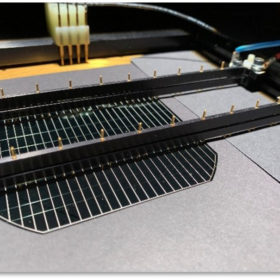
Modular systems to produce perovskite-silicon cells on six-inch wafers
Researchers in Germany are scaling up efforts to bring perovskite-silicon tandem solar cell technology into industrial scale production. The scientists say manufacturing cells of that kind is possible on widely-available six-inch silicon wafers and modular systems are being designed to do so at scale.
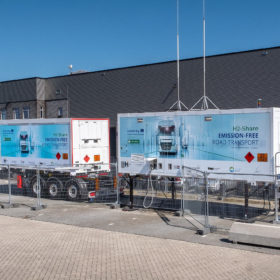
Hydrogen to go
German company Wystrach has developed a 350-bar hydrogen refueling station for heavy duty vehicles which can be installed anywhere.
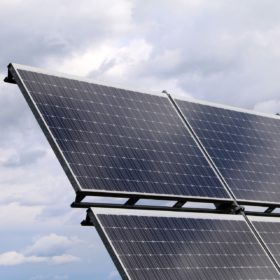
Zimbabwe gold mine to be powered by PV
Caledonian Mining has revealed plans to build a $13 million solar plant at the Blanket gold mine in southern Zimbabwe. It raised funds for the project via a share sale.
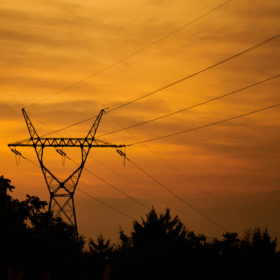
NREL scientists encourage ‘optimal’ PV curtailment
Solar curtailment might become a valuable aspect of future PV deployment, particularly if grid operators start focusing on ‘curtailment management’ instead of ‘curtailment prevention.’ Management would include measures such as flexible generation, storage, load flexibility, and regional coordination.
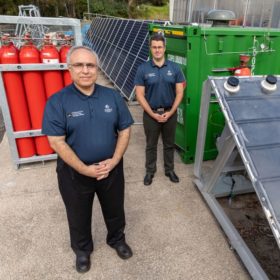
The people, the PV and the pipelines that could make hydrogen work
At Australia’s University of Newcastle hydrogen production starts with water extracted from the atmosphere and electrolysis powered by free energy from the sun; sucking CO2 from the air is the next step to filling Angus Taylor’s beloved gas infrastructure with green methane that can bring spuds to the boil and power the economy while helping to flatten the nation’s emissions curve.
