
2020 module market forecast
According to PV InfoLink’s database, JinkoSolar topped the 2019 rankings for global module shipments with around 14 GW – far higher than any of its rivals. Notably, this is not the first time Jinko has secured the No. 1 spot; it has avoided slipping from the top as many of its predecessors did in the industry’s earlier years. The company is followed by JA Solar and Trina Solar (each shipping more than 10 GW), and then Longi, Canadian Solar, Hanwha Q Cells, Risen Energy, Suntech, Astronergy, and Talesun.

Another day, another PPA in Spain
Days after announcing a deal to supply electricity from 326 MW of solar generation capacity, Spanish energy company Iberdrola has secured another long-term power supply contract.

French energy giants EDF and Total bet on artificial intelligence
The fossil fuel companies plus electrical systems business Thales have launched a joint research laboratory in Paris-Saclay to develop AI technologies to meet the needs of critical systems such as energy production facilities.
Assessing the impact of micro-cracks in solar glass
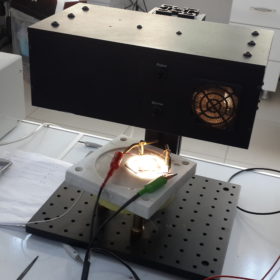
A Turkish research team has analyzed how big changes in temperature can affect absorbance, light transmittance and reflectivity in two types of solar glass. The scientists demonstrated lower efficiency in solar cells and the glass itself were attributable to a large number of micro-cracks and deformations on the glass surface.

Court stops tree clearance for Tesla’s proposed Berlin gigafactory
The High Administrative Court of the Brandenburg region temporarily stopped preparatory work at the site in Grünheide, near Berlin at the weekend. A final decision from the local administration is expected “in a timely manner”.

Beijing to develop 500 MW of solar in Uganda
State-owned China Energy Engineering Corp Ltd said the PV capacity will be developed in two phases in a deal worth $500 million.
The path to market for perovskites
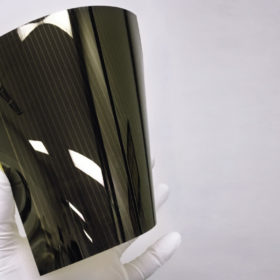
MIT scientists have taken a deep dive into solar technology markets in search of an economically sustainable path to commercialization for perovskites. The group estimates $1 billion of capital expenditure would be required to achieve the economies of scale necessary to compete with rival solar module technologies. However, several alternative suggestions for scaling up with lower investment costs were also considered.
Downsizing silicon carbide inverters
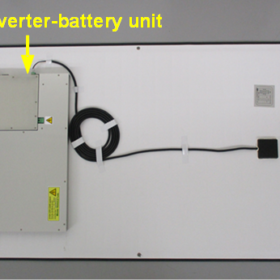
Japanese researchers have investigated the effectiveness of SiC devices in sub-kilowatt applications. A 790g device was tested in a mini PV generator system which included a battery and maximum power point tracker circuit in the same housing. Compared to traditional mini inverters the SiC device showed 3% higher efficiency.
Floating PV in the Persian Gulf
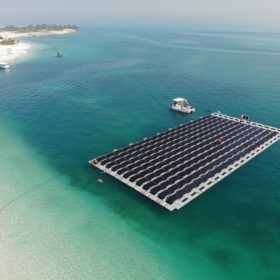
Dubai-based Enerwhere has built an 80 kW floating array at a resort island in Abu Dhabi. The installation features bespoke modules from GCL and Sungrow inverters. The developer told pv magazine the business case was based on the fact the cost of diesel generator operation in such locations can run to $0.25/kWh.

Mongolia kicks off solar-plus-storage tender
The 5 MW Uliastai solar-plus-storage project will be located in the city of the same name in the western part of the country, around 1,100km from Ulaanbaatar. The facility is part of a plan to deploy 40 MW of solar and wind generation linked to energy storage in the nation’s western and Altai-Uliastai regions.
