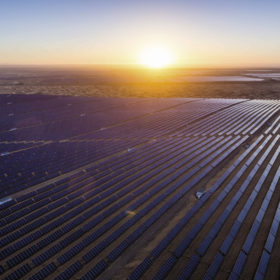
State-owned China Huaneng still running the rule over which GCL assets to cherry-pick
The Beijing-owned electric utility is still carrying out due diligence of solar project assets in the GCL New Energy portfolio, having walked away from a full state bail-out of the GCL business last month.
European Green Deal promises better products – and ecodesign shows the way to making it happen
The European Green Deal needs better and longer-lasting products, and that includes solar panels, says ECOS, the environmental NGO specialising in ecodesign and standardisation.
The state of solar sustainability
As part of pv magazine’s UP initiative, we asked our readers how they felt about sustainability in solar, whether they or their customers were willing to do something about it, and how they saw the conflicting goal of profitability.
Vietnam’s solar opportunities shine bright
The outlook for growth in Vietnam’s renewables sector is positive, writes Daine Loh, research analyst at Fitch Solutions. And the solar segment is one of the key drivers of this impressive growth. Vietnam still has substantial untapped solar power potential. Coupled with an increasingly supportive regulatory environment, and an expected surge in electricity consumption over the next decade, the country’s renewables sector is poised for a new dawn. And this will bring substantial opportunities for investors.
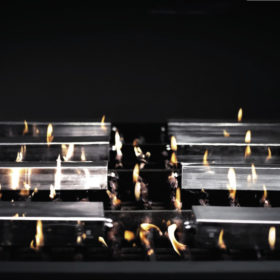
The weekend read: Preparing for takeoff
With demand for lithium-ion battery cells picking up, largely driven by EVs but also from the fast-growing stationary storage segment, production capacities in China are ramping up quickly. But safety and quality must remain centrally important in the face of the need to scale, even more so after the numerous battery fires that shocked buyers globally and brought the South Korean market to a standstill. Clean Energy Associates (CEA) has launched the 2019 BESS Supplier Market Intelligence Program report, covering 40 suppliers, in an effort to support buyers navigating this novel supplier landscape. George Touloupas, CEA’s director of technology and quality for solar and storage, shares the company’s key findings on the supply chain and tells us what can have an impact on Li-ion safety and reliability.
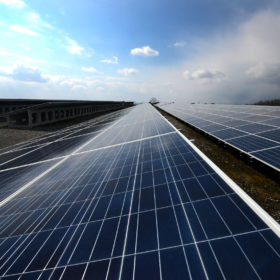
Winners and prices of Tunisia’s 500 MW PV tender
The Tunisian Ministry of Mines and Energy has confirmed that Norway’s Scatec Solar has secured 300 MW at three sites. It also revealed that France’s Engie and China’s TBEA each picked up 100 MW projects. The lowest bid came in at $0.025/kWh, while $0.034/kWh was the highest offer.
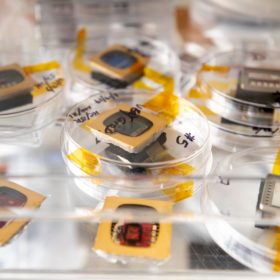
Gauging non-fullerene acceptors for organic PV
U.S. scientists are trying to understand how non-fullerene small-molecule acceptors (NAFs) increase the efficiency of organic PV devices. They claim that methoxy groups embedded in the acceptors could facilitate an efficiency increase of approximately 6%.
Denmark bets on green hydrogen
The Danish government has agreed to provide $19 million in funds for two large-scale hydrogen projects under development on the Jutland peninsula. The two projects will produce green hydrogen for the transport sector from renewables sources. Denmark’s largest energy company, Ørsted, has also announced plans for an ambitious 2 MW electrolysis plant with appurtenant hydrogen storage.
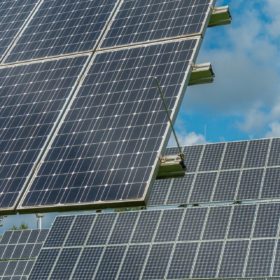
‘You can’t go wrong with solar’
2.5 MW of solar is being deployed at three project sites in Papua New Guinea, with commercial operations likely to begin within nine months. The installations will provide power in the island province of New Ireland at lower prices, while also improving access to electricity.
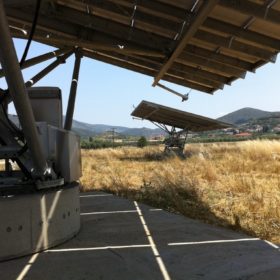
Greece’s PV tender falls to €0.05382/kWh, as incumbent utility transforms
Greece’s energy regulator has announced the results of the country’s latest round of tenders for renewable energy, which saw the incumbent utility offer the country’s lowest bid for a solar PV project.
