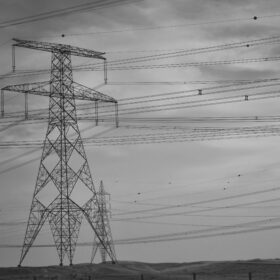
Growing pains: Grid congestion as a renewables bottleneck
The electricity grid is a real bottleneck for energy in the United States, and it’s not only utilities and grid operators who are struggling. Grid congestion also puts pressure on renewable energy project owners and is as much a business problem as it is a technical one, writes Alon Mashkovich, CEO of energy management business software supplier enSights.
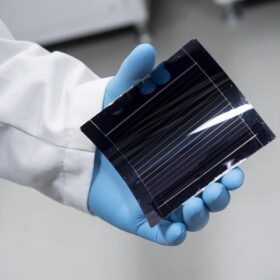
Why CIGS solar keeps lagging behind crystalline silicon
In an interview with pv magazine, Empa scientist Mirjana Dimitrievska explains that the CIGS photovoltaic technology, while promising for efficiency and flexible applications, faces persistent challenges in scaling lab-level performance to cost-effective, high-throughput industrial production, limiting its ability to compete with crystalline silicon. She also emphasizes that long-term stability, reliability, and material sustainability, rather than peak efficiency, are crucial for commercial viability, especially in niche markets like building-integrated and lightweight PV.
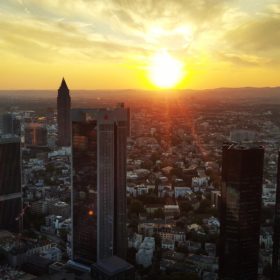
Photovoltaics reach 16.1% share of Germany’s electricity generation in 2025
Germany’s Federal Statistical Office (Destatis) says solar generation rose to 70.1 TWh in 2025, up 17.4% from the previous year, even as wind and hydropower output declined and natural gas generation increased 10.2%.

Photovoltaics for cattle dung gasification
Researchers tested a solar PV-powered system to gasify dried cattle dung, achieving higher energy recovery than grid-powered setups.Their techno-economic-environmental analysis shows the approach can cut emissions and be economically viable, though system utilization and operational factors strongly affect profitability.
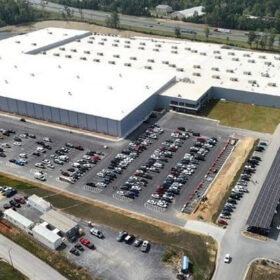
Qcells resumes US solar panel production after customs furlough
Qcells says it has resumed solar panel production at its Georgia manufacturing facilities after US Customs and Border Protection released seven solar cell shipments from South Korea that had been held under the Uyghur Forced Labor Prevention Act (UFLPA), forcing a furlough of 1,000 workers and temporarily halting output at the second-largest module factory in the United States.
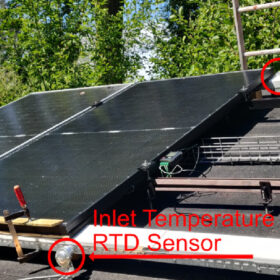
Air-based photovoltaic-thermal system can achieve significant energy savings in buildings
Researchers in Sweden have developed an air-based photovoltaic-thermal system that can preheat ventilation air and domestic hot water, cutting district heating demand by up to 16% for ventilation and 7% for hot water while also reducing peak heating loads in cold Nordic climates.
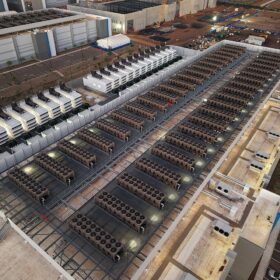
The limits to growth: The Malaysian way of navigating the data centre boom
Malaysia’s rising power demand, driven by industrial growth and data centers, is exposing grid and capacity constraints, prompting policies like Corporate Renewable Energy Supply Scheme (CRESS) to enable corporate renewable procurement while maintaining system cost recovery. A key factor is the System Access Charge (SAC), whose uncertain future trajectory affects long-term solar PPAs and investment decisions, making scenario-based modelling crucial for assessing project bankability.

Tunisia issues tender for 300 MW solar plant with 150 MW/540 MWh storage
The country’s first solar-plus-storage project will be located on a 400 hectare surface near Kébili, a town in the south of Tunisia and one of the main cities in the Nefzaoua region.
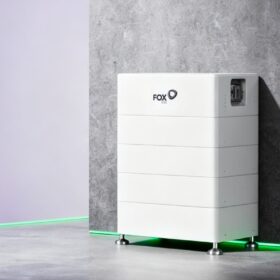
Energy Storage Inspection 2026: Fox ESS, SMA, SAX Power, Kostal and BYD impress with high efficiency
Twelve photovoltaic storage systems with capacities of 5 kW or 10 kW were included in the comparison, among them several new products, all of which achieved efficiency class A. A new study – also examining efficiency losses when storing electricity from the grid – highlights the importance of highly efficient battery storage. The researchers also took a closer look at the warranty conditions of the devices.

Private wires legislation could slow Ireland’s residential rooftop PV progress
Solar Ireland told the Irish government that the Private Wires Bill’s proposed definition of private wires could bring rooftop solar installations within a full electricity licensing requirement, which would place significant additional demand on the energy regulator and slow down installations.
