
PV investors in Honduras facing retroactive review of solar tariffs
The government of the Central American country with the highest installed PV capacity wants to renegotiate contracts awarded in 2015 under an incentive regime. While domestic companies have reportedly agreed to reduce tariffs, international investors are said to be in no mood to capitulate.
IEA warning against stagnation of renewables
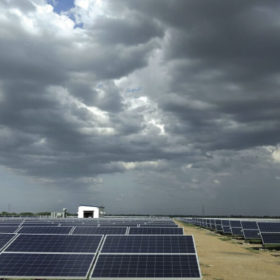
After two decades of growth, the amount of newly installed renewable energy capacity is no longer rising and, despite a 7% growth in electricity generation from clean energy sources, global energy-related carbon emissions have risen 1.7%.

UK scientists build new 3D solar architecture
The back-contact solar cell is said to have a conversion efficiency of around 7%. According to researchers, the cell design includes the removal of expensive transparent conductive oxides.

Longi claims new record for bifacial half-cut module as production equipment orders pour in
The Chinese monocrystalline panel maker said its 72-cell bifacial product has reached an ouput of more than 450 W on the front side. The result was confirmed by Germany’s TÜV-SÜD.

Sungrow secures 400 MW inverter deal in Chile’s largest project
The Chinese manufacturer has signed an agreement with Enel Green Power Chile to supply its 1500 Vdc central inverters to a PV plant at Copiapó, the largest to be built in the country to date.

Swedish Energy Agency eyes PV to achieve 100% renewables by 2040
Though PV will remain in the shadow of wind and hydropower in the north of Europe, an ambitious solar deployment scenario in Sweden could lift the market into the gigawatt club through to 2040.
Solar distributed generation set for another record year in Brazil
New PV installations under the nation’s net metering scheme grew 137% year-on-year from January to March, according to consultancy Greener, and module imports registered even greater growth, signalling activity in the distributed generation segment is increasing at a faster pace. With the regulator mooting changes to the net metering regime, however, it may reflect customers rushing to secure current tariffs.
French-German battery alliance secures €5 billion as Tesvolt works on gigafactory
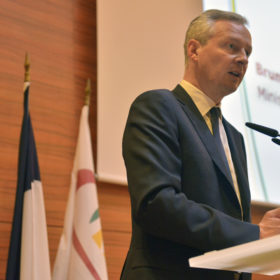
Ministers have reaffirmed plans for a Franco-German battery industry. The project is being supported in principle by the European Commission, which could give its approval by October. Meanwhile, German storage specialist Tesvolt is building a commercial storage system factory in Germany.

Georgia preps 50 MW solar auction
Under the supervision of the European Bank for Reconstruction and Development, the Georgian authorities will identify a site for a 50 MW solar project. Tblisi is also seeking help to define an auction mechanism for renewables.
How to profitably upcycle 80 million tons of PV waste in Australia by 2050
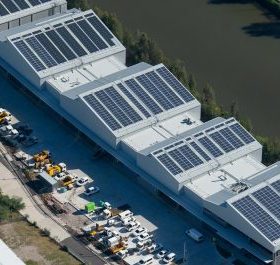
Research by the University of New South Wales has examined the economic barriers, technologies and opportunities of recycling end-of-life silicon PV modules for profit.
