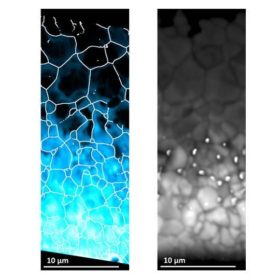
How selenium alloying gives CdTe thin film a boost
A new study conducted by an international team of scientists from leading institutions in the U.K. and the United States provides an explanation as to how the addition of selenide can greatly improve the efficiency of cadmium telluride solar cells. Explaining the performance boost will provide researchers with a route to explore further efficiency improvements, pushing the material’s cost even lower.
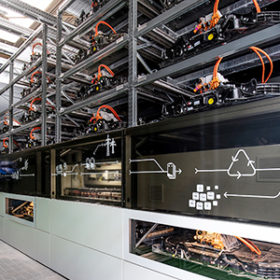
Belectric installs 1.9 MWh of battery storage for Audi in Germany
The German EPC contractor built the 1.9 MWh energy storage system for the automaker as part of a micro smart grid project on the EUREF Campus, a green innovation hub in Berlin.

Botswana cancels 100 MW PV tender, plans new procurement exercise for June
The canceled tender was seeking investors for the construction of two 50 MW PV plants, as part of a joint venture with local utility BPC. The new tender will focus on independent power producers.

OCBC Bank consortium to finance 30 MW in Malaysia
A group led by the Singapore-based lender has revealed plans to finance a 30 MW solar project in northwestern Peninsular Malaysia. The companies did not disclose additional details about the financing package.

Sonnen launches fixed-price solar and storage plan in Victoria, Australia
Households in the Australian state of Victoria can now sign up for sonnenFlat, an energy plan that offers a guaranteed annual energy allowance including solar, storage and grid energy usage for a fixed fee.

Bifacial module demand continues to grow
Module technologies such as bifacial, half-cut, multi-busbar (MBB), and shingled are maturing after two years of improvement. Comparing module technologies, we see that half cut has a high degree of maturity in production equipment, high yield rates, and output climbing since the beginning of 2018. From late 2018 to 2019, most companies have expanded or upgraded their portfolios by pairing half-cut technology with MBB technology.
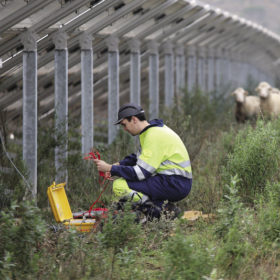
The weekend read: Preparing for take-off
A boom in self-consumption and gigawatt-auctions for solar parks are drawing developers to France’s historically underwhelming photovoltaics market. Europe’s dozy giant has long punched beneath its weight, but pro-renewable reforms are helping the country cut red tape and unlock its vast solar potential.

Palestine to bring online its first PV plant, at 7.5 MW
The site is the first step in a planned 200 MW portfolio. Along with a few ground mount installations, the Palestinian authorities set out to achieve substantial parts of the portfolio by tapping public rooftops. The authorities have already secured rooftop spaces at 500 schools for the installation of 35 MW of capacity.

Thailand launches net metering scheme for residential PV
The program will be open to solar power systems with a generation capacity larger than 10 kW. Initially, some 100 MW of solar power will be allocated through the mechanism. Net metering tariffs, however, will be little more than half the current electricity price.
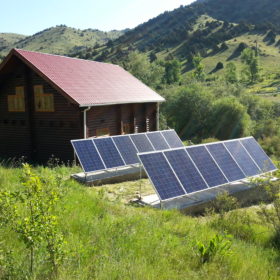
Solar the key to progress on global access to electricity
A tracking report from five major international agencies finds the world is lagging behind sustainable development goals for 2030. While more effort is needed to reach some of the world’s poorest populations, though, notable progress has been made in reducing the electrification deficit, thanks to off-grid solar and minigrids.
