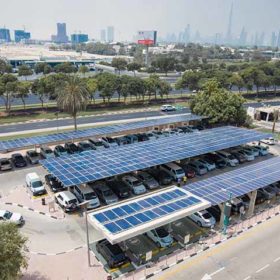
Oil company’s lubricant factory goes 100% solar in Dubai
Dubai’s ENOC announced it has completed the construction of a rooftop solar array on its lubricants manufacturing plant in Dubai. The array can cover the complete power demand of the factory. This is not the first time the oil company has turned its head towards solar PV to power its facilities. Already nine petrol stations are equipped with solar canopies for 100% green energy supply, with the company vowing to equip all future petrol stations with such canopies.

Subsidy windfall helps GCL Poly eat into debt mountain
The Chinese manufacturer – which is gambling on a big rebound in global appetite for the raw material for PV panels materializing soon – will devote all of its $143m solar subsidy income to paying off a daunting amount of borrowing.
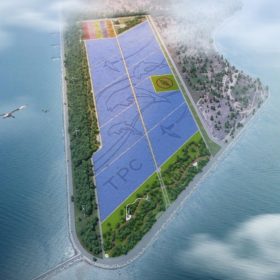
Taiwan brings first phase of island’s largest PV plant online
14 MW of new solar capacity began feeding energy into Taiwan’s grid this week, as the first phase of a planned 100 MW facility being built by the island’s utility Taipower.
The reasons India’s 10 GW solar tender will not attract big developers
Big players such as Acme, ReNew, Adani, Azure, Hero Future and Aditya Birla Solar are likely to stay away from procurement which requires 3 GW annual manufacturing commitment, says industry insider Gopal Lal Somani.
Fears UK autumn budget could see a coal renaissance
Analysts have released a report which examines multiple carbon pricing scenarios, and their effect on UK power bills, renewables and the carbon budget. The UK’s Carbon Price Support could be lowered in the autumn budget next week, putting the nation further off course on its carbon budget. A high CPS would foster renewables, without driving electricity bills up.

Pakistan’s regulator to review two PV project proposals totaling 100 MW
Pakistan’s electricity regulator NEPRA will review a proposal for the construction of a 50 MW PV plant planned to sell power at approximately $0.071/kWh, while a second 50 MW project is expected to deliver power at a levelized tariff of $0.076/kWh.

BASF to build battery material factory in Finland
As part of a strategic alliance, BASF and Norilsk Nickel aim to meet growing demand for battery materials for electric vehicles.

Uttar Pradesh prepares to procure another 550 MW of solar
The Indian state has set an electricity price ceiling of INR3.10/kWh and reserved the right to cancel the auction if it doesn’t fancy the resulting tariff. Bidders can go for projects ranging in size from 5 MW up to the whole capacity on offer.
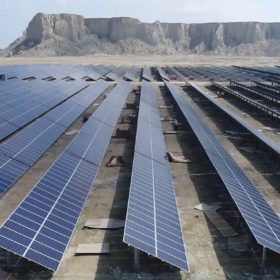
Iran’s operational PV capacity reaches 250 MW
According to new numbers released by Iran’s Renewable Energy and Energy Efficiency Organization (SATBA), renewable energies have reached a combined cumulative capacity of 650 MW, with solar representing a 39% of the total.
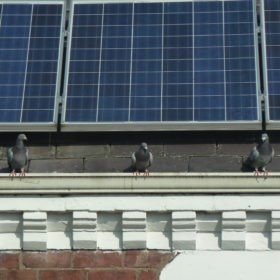
EU approves France’s new scheme for self-consumption
The European Commission has given the green light to €200 million in public support that will be provided by the French governmnet for approximately 490 MW of renewable energy capacity expected to be deployed under the self-consumption regime. The scheme will be based on technology-neutral tenders.
