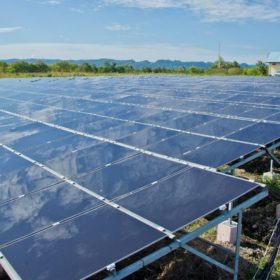
Micro and mini-grids to bring power to Indonesia’s off-grid communities
The government wants to help the provinces of eastern Indonesia – in particular Papua, which has the lowest electrification rate in the country. Policymakers are in talks with the Asian Development Bank and seeking advice for implementation.
Price of solar keeps falling in Lebanon
According to a report from the United Nations Development Programme, the turnkey price for solar in the nation declined by around 17.4% between 2016 and 2017 – and by 79% over the last seven years. By the end of last year, cumulative installed Lebanese PV capacity reached 35.4 MW.
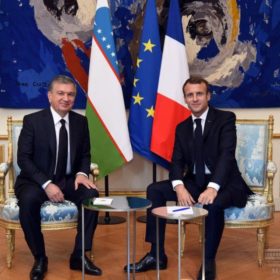
Uzbekistan’s steeplechase towards renewable energy
French oil group Total has reached agreement with national utility Uzbekenergo to build a large-scale PV plant in Samarkand province. However, construction on a 100 MW project by China’s Syngyes has been suspended.
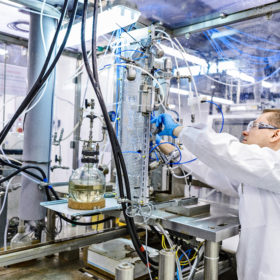
Innolith launches non-flammable battery with 50,000 charging cycles
Inorganic electrolytes will do the trick the company says. For multi-MW grid-scale applications the company says its technology can boost battery life to 50,000 cycles and is non-flammable. It adds that the costs of the product are competitive with conventional battery systems. Innolith is taking over the baton from Alevo, including chief executive and engineers. Alevo, however, went bankrupt last year, making the same promises.
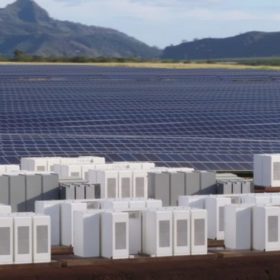
Hawaii’s march to 100% adds 260 MW solar + 1 GWh storage
The Hawaiian Electric Companies are in negotiations with developers to build seven solar projects across three islands.

Solar funding moves from companies to projects
Mercom Capital’s latest report shows sustained low levels of funding for solar companies, but strong investment in solar projects and many acquisitions.
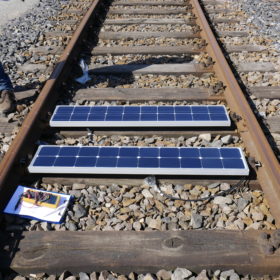
Bankset Energy announces GW-scale plans for solar railways the world over
Bankset Energy Corporation has ambitious plans to install gigawatts of solar PV on railway sleepers across the globe. While the first installation took place in Switzerland, work is under way on projects in Germany, the United Kingdom, France, the United States, China and Italy; and gearing up in Austria and Spain. pv magazine speaks to Bankset Group president, Patrick Buri.
EDF now aims to become e-mobility leader
EDF has launched yet another ambitious plan, this time aiming to become the leader in e-mobility by 2022. It has outlined three targets, and cemented new partnerships, to achieve this goal.

Spain may introduce additional measures to support self-consumption
A few days after the Spanish government introduced new rules for self-consumption and canceled the solar tax, the Spanish Parliament is now reviewing new provisions to reduce the time frame of the registration for a project under the self-consumption regime, while also simplifying bureaucratic procedures.
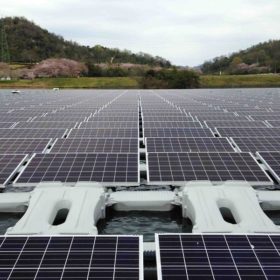
Floating PV to splashdown in Vietnam
A 47.5 MW floating solar power plant is being planned by Vietnamese hydropower producer Da Mi, a unit of Vietnamese power utility Electricity of Vietnam (EVN), at one of its water reservoirs in the south of the country. The Asian Development Bank is now considering financing the project. Meanwhile, Sharp has announced the completion of a 48 MW ground-mounted PV facility in the Eastern Asian country.
