
Huawei exhibits its smart solutions at Intersolar Europe, responds to SolarEdge complaint
pv magazine met with representatives of Chinese inverter manufacturer Huawei at the company’s booth at Intersolar Europe today to discuss the patent infringement case brought by SolarEdge in Germany.
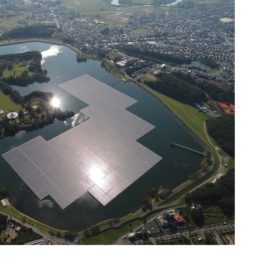
Kyocera to supply batteries, home energy systems for virtual power plant in Japan
Kyocera will participate in a new project in northern Japan to test how flexibly electricity suppliers can respond to fluctuations in energy supply and demand.
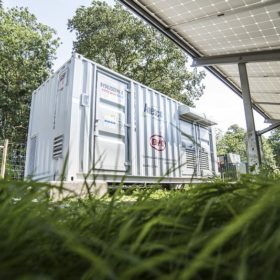
National Grid UK to receive ancillary services from 27MWh of storage capacity
ESB and Oersted UK independently announced this week they have acquired storage assets to deliver ancillary services to the UK grid operator.
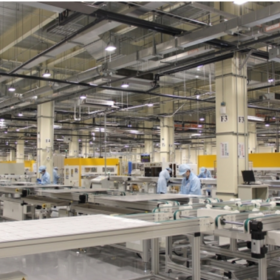
Intersolar Europe: Could Chinese setback mean a European comeback?
While tariffs may inhibit India’s ability to benefit from anticipated record low Chinese panel prices, Japan already has a strong pipeline and two of the world’s solar pioneers – Spain and Italy – could be given a shot in the arm by new administrations.
Is India’s 225 GW renewables target achievable?
There was incredulity in some quarters as the federal government raised its renewables ambition another 22%, but the stellar performance of the past four years points to the new target being a realizable one.
India: Waaree opens 1 GW solar module plant, plans to manufacture batteries
Waaree Energies has set up a 1 GW solar PV panel plant in Vapi, which is in addition to its existing 500 MW plant in Surat, Gujarat. The company intends to further increase capacity to 2 GW. Among other key developments, it has partnered with third-party equipment suppliers to manufacture batteries.

Update: SolarEdge files lawsuit against Huawei and German distributor Wattkraft
The inverter manufacturer alleges that its patented DC optimized inverter technology has been infringed on in the German market. It adds that Huawei’s residential inverters use an architecture, which violates its patents. Huawei has said it is “evaluating the claims”, however it does not believe it has infringed any valid patent rights.
India issues EoI for establishment of PV module manufacturing units
India-based Central Electronics Limited (CEL) has invited an expression of interest (EoI) for the establishment of manufacturing facilities for the production of solar cells and crystalline silicon (c-si) modules (conventional/flexible) in India.

Solar trade dispute: New petition to review undertaking likely submitted to the EU
There is no official confirmation that a request for a review of the anti-dumping and anti-subsidy measures against Chinese solar PV manufacturers has been submitted in Brussels in early June, however there are several reasons to believe it has likely happened.

Falling battery costs to push solar, wind to 50% electricity generation by 2050, but electricity still failing CO₂ reduction targets – BNEF
Solar PV capacity is set to grow 17-fold, and wind six-fold, by 2050, to account for nearly half of global electricity generation, predicts BNEF, while investments will reach US$11.5 trillion. Cost reductions will drive this charge, particularly in the battery market, which will benefit from the EV manufacturing ramp up. Despite this, the electricity sector is still failing to bring CO₂ emissions down to the required levels, with its continued dependence on gas.
