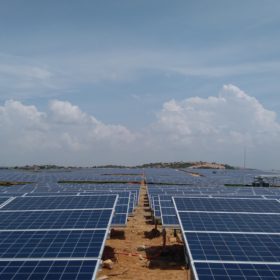
Solar is turbocharging Karnataka state to renewables leadership of India
The remarkable 4 GW of solar capacity added last year has seen Karnataka displace Tamil Nadu as the India’s renewables number one. And there is more to come, according to a new report, with PV set to account for a third of rising energy demand over the next decade.
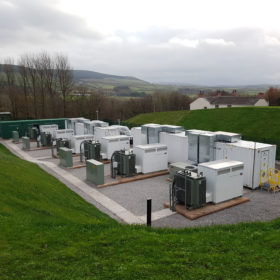
Oil major Vitol invests €200 million in new RE fund with Low Carbon
Vitol and Low Carbon have announced a €200 million fund, VLC Renewables, which will invest in renewable energy projects across Europe. Large off-shore wind will be the primary focus, with no solar plans as of yet.
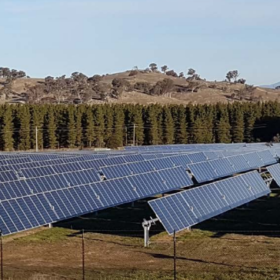
‘UK government knows the answers on solar, it’s just stalling’
Latest consultation exercise has been launched solely to buy time because Brexit is distracting officials from policymaking, according to a spokesman from the National Farmers’ Union.
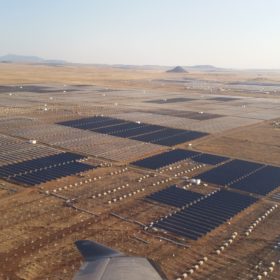
Revenues rise for Scatec Solar, as projects under construction surpass 1 GW
Norwegian project developer, Scatec Solar has posted increased revenues for the second consecutive quarter. The company states that this performance is primarily attributed to its increased development and construction activities, with more than 1 GW of projects under construction worldwide.

Video: Future PV Roundtable @ Intersolar Europe 2018
Peijun Shen of Huawei discusses integrating bifacial modules into PV power plant projects from the Future PV discussion at this year’s Intersolar Europe. Bifacial technology is making leaps and bounds, and suppliers up and down the value chain have to deliver new technologies and solutions to pave the way for the next steps in PV systems.
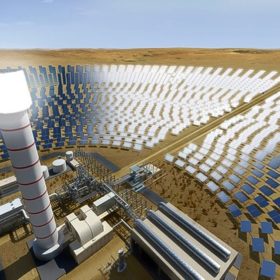
ACWA Power sells 24% stake in 700 CSP project to Chinese concern
The Saudi-based energy company has sold a 24.01% stake in its 700 MW CSP project to China’s Silk Road Fund.

Indian duties could jeopardize 27 GW of solar projects
Calling for a complete exemption of the 25% safeguard duty on solar equipment, India’s Solar Power Developers Association (SPDA) says, if imposed, it will jeopardize the viability of around 27,000 MW of solar projects involving an investment of more than Rs 1 lakh crore (around US$15 billion). Other key players also speak out against the tariff plans.

Italy: Glass to Power crowdfunds €2.25 million, plans solar window fab
Italy-based Glass to Power has raised €2.25 million via crowdfunding to advance its plans for the roll out of an industrial production line for its transparent solar PV windows. The product is expected to be marketed in 2019.
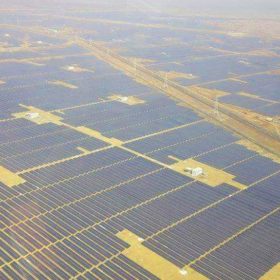
Greenko’s 2.75 GW solar, wind, storage project approved in India
Greenko Energies will set up India’s largest Integrated Renewable Energy Project (IREP) in Andhra Pradesh at an investment of INR 150 billion (US$2.2 billion). Recently approved by the Andhra Pradesh government, the project will comprise 1,000 MW of solar energy, 550 MW of wind energy and 1,200 MW of standalone pumped storage capacities. It is expected to provide employment to 15,000 people during construction and 3,000 people after construction.
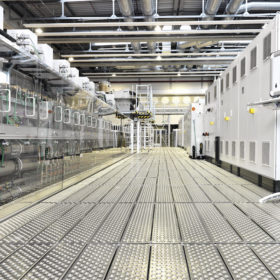
The weekend read: CIGS is back, back again
Stability and reliability, partial transparency, monolithic deposition onto flexible substrates, aesthetically pleasing appearance, applicability in roll-to-roll production, superior temperature coefficient, potential in tandem applications, and suitability for BIPV: The list of advantages that CIGS technology offers is well established and lengthy.
