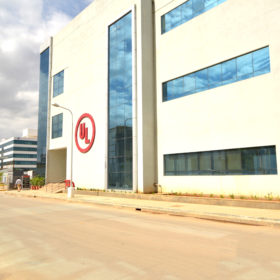
Complete ecosystem needed to ensure India’s solar success – UL India interview
The Indian Government must create a complete ecosystem to ensure the effective on-ground execution of its ambitious solar program, says Chakradhar Byreddy, Director–Renewable Energy, UL, Asia Pacific, during an interview with pv magazine. This includes investing in laboratory infrastructure, and skills for technical due diligence, energy yield assessment and forecasting.
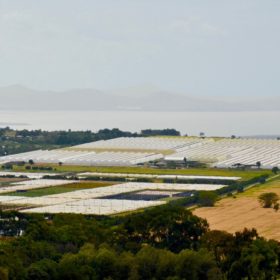
Ecoligo crowdinvestment campaign for flower farm PV system in Kenya launched
Ecoligo has launched another financing round for the installation of a rooftop solar PV system at a flower farm in Kenya. The system is set to reduce the farm’s grid electricity demand by 50%, and lower its OPEX.
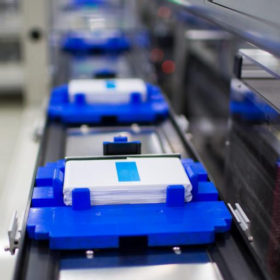
China’s CATL to invest €240 million in Europe’s first battery cell fab
The Chinese battery manufacturer has said it will establish a fab in Germany’s Thüringen with an annual capacity of 14 GWh. The battery cells will be primarily produced for the electric vehicle (EV) industry. Up to 600 jobs are expected to be created. In related news, BMW has entered a €4 billion long-term partnership with CATL.
Global EV market growing sturdily despite trade dispute setbacks
EnergyTrend recognizes recent tariffs developments will hit the electric vehicle (EV) industry. Despite this, environmental regulations, as well as costs and technological advancement, will prevail and continue to drive EV sales globally.
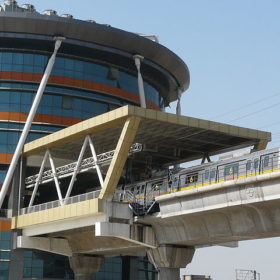
India: 750 MW Rewa solar project starts supplying power
The 750 MW Rewa solar power project, one of the world’s largest single-site solar power plants, has started operations.
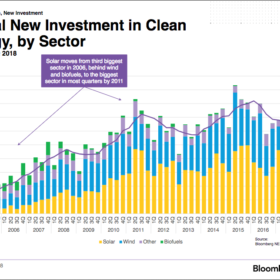
Global solar investment drops due to low project costs, China policy change
While overall global investment in clean energy saw a decrease of just 1% YoY in the first half of 2018, solar’s share dropped 19% following changes to China’s PV policy and lower project costs, says Bloomberg NEF (BNEF). It forecasts this trend to continue throughout the year.
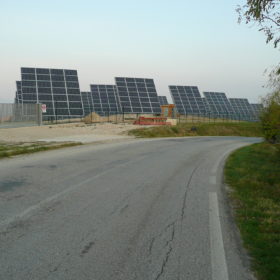
Italian government challenges Sicily’s moratorium on solar parks
The Italian Council of Ministers said that Sicily’s temporary suspension of all approvals for large-scale wind and solar project is unconstitutional.
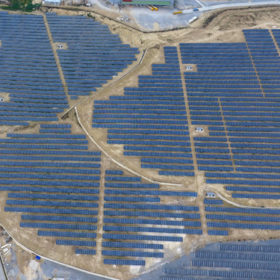
Turkey authorizes foreign-currency loans for already approved unlicensed PV projects
The measure is intended to reduce domestic foreign exchange exposure for investors and developers of PV projects up to 1 MW (and solar parks consisting of several 1 MW units). Prior to these new rules, only licensed PV projects exceeding 1 MW in size were granted this kind of financing.
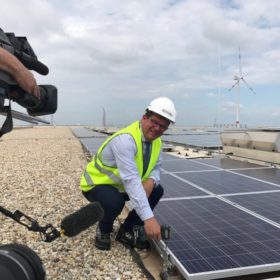
Belgium: Flanders to allow direct lines for solar, RE starting from 2019
A new amendment to the region’s energy law allows enterprises to sell power to one other through the so-called direct line model, starting from 2019.

Lower module pricing will bolster PV deployment in India
More than 80% of India’s solar equipment requirements are met through imports from China. Against this backdrop, industry analysts see the predicted 30% lower module pricing, following China’s revised policy, as a good news for Indian PV projects.
