
Enel plans to start solar cell production, announces developments for 34 MW in Zambia and 238 MW in Mexico
The Italian utility is laying the foundations for solar cell production at its PV panel manufacturing facility. The final goal of the project is 1 GW commercial cell production. Meanwhile, Enel Green Power has secured the PPA for a 34 MW PV facility in Zambia, and has broken ground on a 238 MW solar park in Mexico.

EIB extends €200 million loan for solar projects in India
In its largest ever support for solar power in Asia, the European Investment Bank (EIB) has confirmed a €200 million ($214 million) loan to the State Bank of India.

Fraunhofer ISE to investigate PV panels for commercial vehicles
German solar research institute Fraunhofer ISE is investigating the development of integrated PV panels for commercial vehicles. After conducting analyses using real life solar irradiance data, Fraunhofer sees great potential in this field.
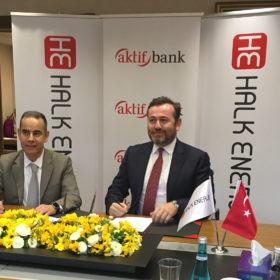
Çalik Group acquires 50% stake in Turkish solar EPC contractor Halk Enerji
Halk Enerji will focus on unlicensed PV projects up to 1 MW, which in Turkey are expected to reach a volume of 2 GW this year.
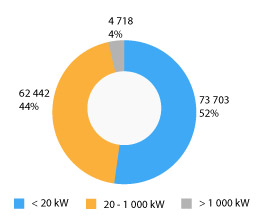
Sweden tops 140 MW of installed PV capacity
The Scandinavian country added only 13 MW of new PV systems in 2016. Around 52% of the cumulative capacity is represented by PV systems up to 20 kW.
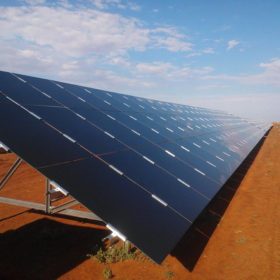
Germany supports implementation phase of Tunisian Solar Plan
The German Federal Enterprise for International Cooperation (GIZ) will provide the Tunisian government with €7 million. The North African country will use the donation to finance the preliminary support project of its 1 GW renewable energy plan, which includes the installation of 650 MW of solar.
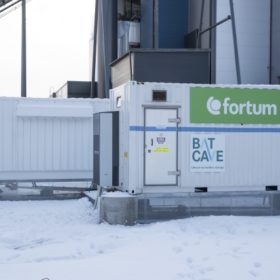
Storage in store: battery pipeline reaches 3.4 GW in Q1, reports IHS Markit
Latest data from market analysts IHS Markit reveals a utility-scale global battery storage pipeline of 3.4 GW – a figure double that of last year and a growth that can trace its roots to rising demand in China and Asia.
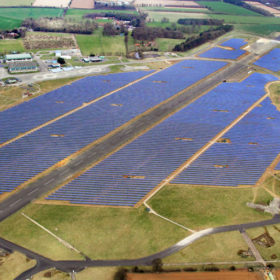
UK: Wirsol Energy connects 19 solar parks ahead of ROC deadline
The solar subsidiary of the German renewable energy developer Wircon GmbH has managed to connect 19 solar parks totaling 105.5 MWp of capacity at various sites across the U.K.
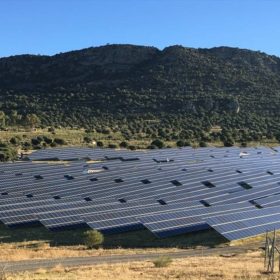
Sonnedix finalizes acquisition for 136 MW of Spanish solar capacity
The independent power producer is now the owner of the Vela Portfolio, which amounts to 136 MW of solar PV capacity across 43 Spanish sites, and has been sold by Centerbridge Partners.
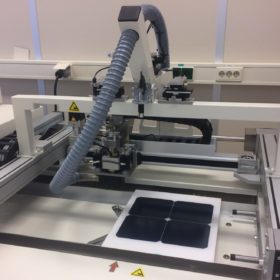
Tempress & ECN develop process for IBC cell production
Equipment manufacturer Tempress has teamed up with Dutch research center ECN to develop a production process for n-type IBC solar cells with efficiency above 21%. A pilot of the new process was completed in just three months, illustrating its compatibility with mass production.
