
Cyclones and unseasonal polar winds shape Australia’s solar resource in March
In a new weekly update for pv magazine, Solcast, a DNV company, reports that March in Australia was unusually wet and disrupted, with frequent tropical cyclones, polar air intrusions, and repeated low-pressure systems causing widespread cloud, storms, and record cold in the southeast. Solar irradiance was mixed: below average in the south due to persistent cloud and storms, but near or above average on some northern and coastal regions where breaks between systems allowed recovery.

Free midday electricity key to drive consumer demand to match excess PV generation
Free midday electricity schemes aim to shift household demand into periods of high solar PV generation, reducing midday surplus and evening fossil-fuel ramp-up. Research on Australia’s Solar Sharer program suggests such incentives could significantly improve renewable utilization, but outcomes depend on consumer behaviour, load shifting, and rebound effects.
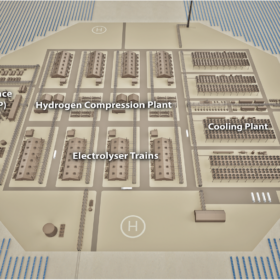
Australian developer moves ahead with modular green hydrogen production plant
Intercontinental Energy, the company driving two of Australia’s largest renewable energy projects, has announced key milestones for the system architecture that is to serve as the backbone for the proposed giga-scale green hydrogen projects.
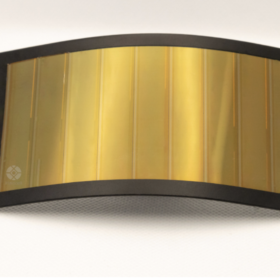
Halocell Energy, Sofab Inks advance perovskite collaboration
An ongoing collaboration between Australia’s Halocell Energy and U.S-based Sofab Inks finds that perovskite modules incorporating Sofab’s Tinfab electron transport layer maintain approximately 100% of their normalized efficiency after 1,300 hours under accelerated combined light and damp-heat testing.

Fortescue fast-tracks delivery of ‘world first’ off-grid project combining solar, wind, up to 5 GWh of BESS
The rollout is accelerated to eliminate the use of diesel from iron ore mining and processing.
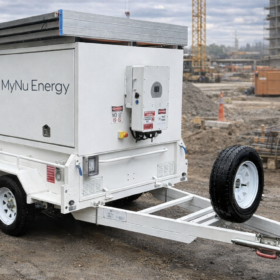
MyNu Energy launches mobile solar and battery energy storage system
MyNu Energy has launched a mobile solar generation and battery energy storage system designed to reduce reliance on diesel as the Middle East crisis continues to cause concerns about fuel shortages and uncertain energy costs.

Aggreko to deliver ‘Australia’s largest’ off-grid renewable hybrid power plant
Aggreko has unveiled plans to build what it says will be Australia’s biggest off-grid renewable hybrid power facility after signing a long-term power purchase agreement with the owner of Queensland’s largest proposed copper mine.
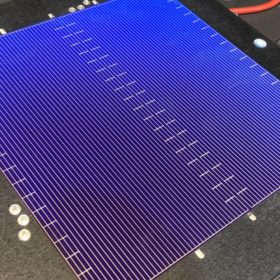
How LECO process could push TOPCon solar cell efficiency beyond 26%
A new UNSW study shows that laser-enhanced contact optimization (LECO) can boost industrial TOPCon solar cell efficiency by improving contact properties and reducing recombination losses. By combining optimized firing conditions with LECO “repair” of contacts, the approach balances recombination and resistance, offering a practical path for conventional TOPCon cells to compete with PV technologies offering higher efficiencies.

Australia rooftop PV hits record as battery rush accelerates
Australia’s rooftop solar market has surged 19% in the past month with the latest data revealing a record 341 MW of small-scale rooftop PV capacity was registered across the country in March as consumers also raced to install battery energy storage systems.
Spark secures Australian approval for massive solar and battery project
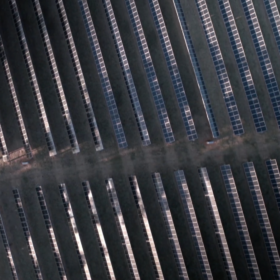
Spark Renewables has secured final state planning approval for a solar and battery project that will add 800 MW of PV and 356 MW/1,574 MWh of energy storage capacity to the grid in New South Wales, Australia.
