1komma5° acquires Australia’s Arkana Energy
German solar tech developer 1komma5° has strengthened its presence in the Australian market with the acquisition of Arkana Energy Group.
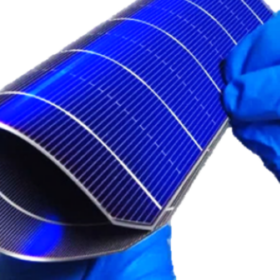
Longi develops flexible heterojunction solar cell with 26.06% efficiency
The Chinese module manufacturer led an international research team seeking silicon material savings and efficiency gains in the development of heterojunction PV devices. The cell achieved a certified power conversion efficiency of 26.06% with a thickness of 57 μm, with Germany’s Institute for Solar Energy Research confirming the result.
EDF to develop 3 GWh pumped hydro project in Australia
The Australian arm of French energy giant EDF Group has acquired and agreed to co-develop the proposed 300 MW/3 GWh Dungowan pumped hydro energy storage project in New South Wales, Australia.
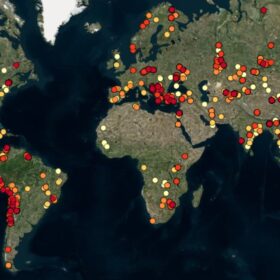
Global atlas for pumped hydro at mining sites
The researchers that created the atlas considered mining pits, pit lakes and tailings ponds within mining sites and located nearby reservoirs. The selected sites have a potential storage capacity of 30 TWh.
Australian state awards permit for 1.3 GW pumped hydro station
Former Australian Prime Minister Malcolm Turnbull has secured a contract to develop two large-scale pumped hydro projects on water reservoirs owned by the New South Wales government.
Australian researchers develop magnesium-ion water battery
Australian scientists claim that the process of manufacturing magnesium-ion water batteries indicates that mass production is feasible, given that materials such as magnesium and zinc are abundant in nature.
Big batteries to create tailwinds for large-scale solar in Australia
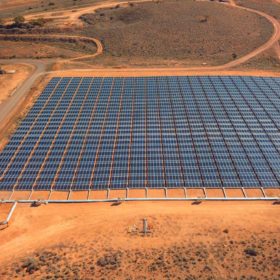
The accelerating deployment of large-scale energy storage is one factor behind the tailwinds forming for large-scale solar in Australia. Rystad Energy Senior Analyst David Dixon said that with gigawatts of big batteries under construction, the flexible load will create demand for solar during peak PV production periods.
Rooftop PV to outpace all renewables in Australia, says Green Energy Markets
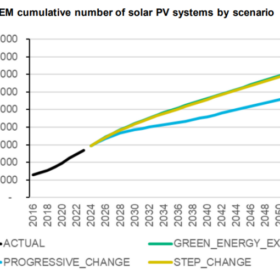
A new report by Green Energy Markets (GEM) to the Australian Energy Market Operator (AEMO) confirms the future domination of rooftop solar and battery storage in Australia, with a projected cumulative PV capacity potential of 66 GW to 98.5 GW by 2054.

The Hydrogen Stream: EU auction attracts 132 bids for 8.5 GW electrolyzer capacity
The European Hydrogen Bank’s pilot auction has drawn 132 bids, exceeding the available budget, while Australia has finalized an agreement to build a hydrogen hub.
Qcells exits Australian market
South Korean solar module maker Qcells told its local team this week that its Australian subsidiary will be closed. The decision underscores the highly competitive nature of the Australian solar marketplace and the company’s strategic decision to focus on its home market, the United States, and Europe.
