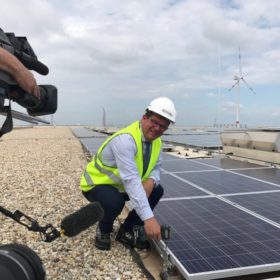
Belgian region of Flanders sees first MW-sized PV project come online after revision of incentive program in 2013
A 2.2 MW rooftop PV array was installed on Nike’s distribution center in Ham. The facility will cover up to 15% of the building’s energy needs.
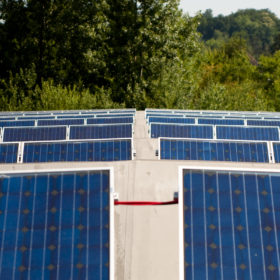
Belgium: Flanders sees new PV installations almost double so far this year
Once a leading solar market, the Belgian macro-region of Flanders keeps showing signs of robust growth in new installations in the first five months of this year, after installing 103 MW of solar in 2016.
Belgian solar glass maker Ducatt files for insolvency
Ducatt had to start insolvency proceedings due to the insolvency of German solar module manufacturer SolarWorld. Around 50% of Ducatt’s revenue came from orders placed by SolarWorld, as reported by local media.
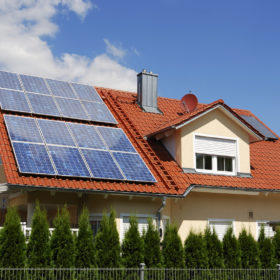
Belgium: researchers say solar-plus-storage is far from becoming economically viable
According to a scientific paper from the Université libre de Bruxelles, even a further reduction in storage prices may not be sufficient to make solar-plus-storage attractive in the Belgian market.
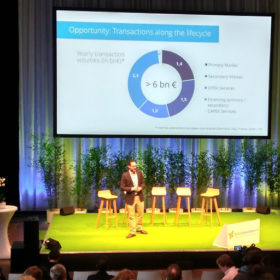
Ecosummit 2017: Eneco Group to invest in Next Kraftwerke
Dutch energy company Eneco Group announced its acquisition of a 34% stake in Next Kraftwerke, a German company operating one of Europe’s largest virtual power plant networks. The investment was announced at the Ecosummit cleantech event in Berlin today.
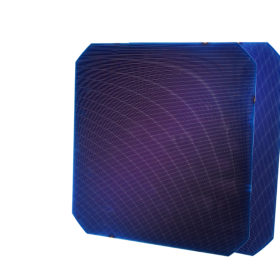
Imec claims 22.8% efficiency for bifacial n-type PERT solar cell
The Belgian research institute has developed a bifacial n-PERT solar cell with a conversion efficiency of 22.8%. Imec researchers claim this cell has the potential for a cost-of-ownership at module level of less than $0.30/W.
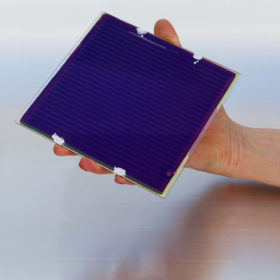
Imec’s perovskite-based PV module reaches 12.4% efficiency
The Belgian research institute has improved the efficiency of its 4x4cm² perovskite module by 1.1%.

Belgium: Wallonia’s regulator imposes grid-fee for solar starting from 2019
The Belgian French-speaking region of Wallonia could introduce a grid-fee for residential PV starting from 2019. PV systems operators fear an annual fee ranging from €330 to €560.
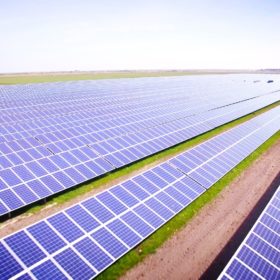
Eneco acquires Eni Belgium, plans more investments in solar and wind
The Dutch power provider has acquired Belgian utility Eni Belgium and a larger share in Belgium’s power market. The company said that it will now invest in new power production in the country, especially in solar and wind.
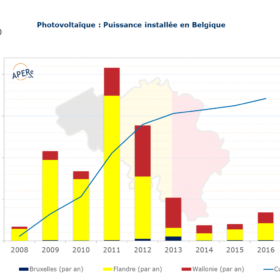
Belgium’s PV power surpasses 3.42 GW
Belgium has now over 3.4 GW of installed PV power. Most of this capacity, 2.45 GW, is located in the Flemish-speaking region of Flanders. The French-speaking region of Wallonia and the Brussels Metropolitan Region have reached 931 MW and 56 MW, respectively. In 2016, the country registered a 77% increase in new installations.
