
Brazil has imported 7.5 GW of solar modules so far this year
According to a new report from Brazilian consultancy Greener, the Latin American country imported 1,049 MW of solar panels in October alone.
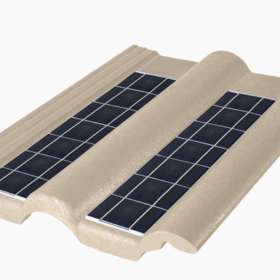
New solar tile from Brazil
Developed by Brazilian construction materials provider Eternit S.A., the tile has a nominal power of 9.1 W and an average monthly generation capacity of 1.15 kWh. It is available in five colors and two versions with a classic or reinforced design.
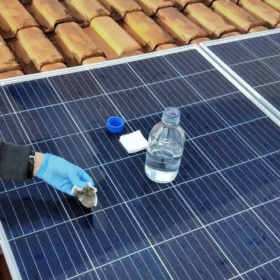
Solar panels host microbes that may be used for biotech applications
Scientists in Brazil have found that photovoltaic modules may be a repository of specialized microbes in tropical regions. According to them, these micro-organisms may be used in sunscreens, pigments for processed foods, chemicals, textiles, pharmaceuticals, and cosmetics.
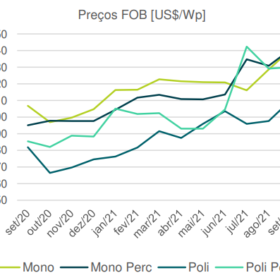
PV module import prices up by 20% in Brazil since last December
Brazilian consultancy Greener reports that monocrystalline PERC modules are currently being sold at an average price of $0.24/W in the Brazilian PV market, but prices may keep rising, possibly into 2022.
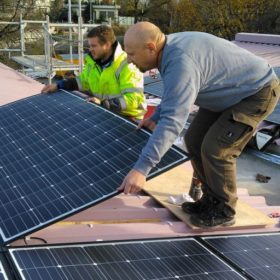
Solar job numbers kept on rising in 2020
The latest edition of a clean power jobs survey produced by IRENA and the International Labour Organization has stressed the important role which will need to be played by the public sector if the energy transition’s employment benefits are to be shared equally.
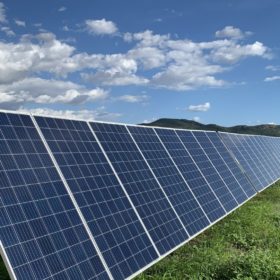
Solar secures 236 MW of capacity in Brazil’s A5 auction, with average price of $0.03109/kWh
The Brazilian authorities have allocated 860 MW of power capacity in the country’s latest procurement exercise, including 20 solar projects.
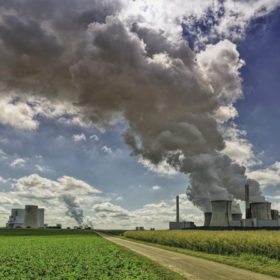
China holds the key to cancelling half the world’s new coal project plans
With pressure mounting on the world’s governments to turn their back on the fossil fuel, China and peers in South East Asia, Europe and South Asia could help deliver a coal-free future at the COP26 climate summit planned in Glasgow in November.
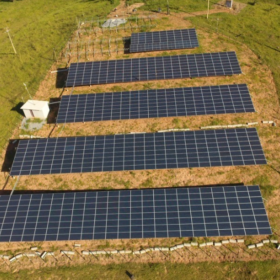
Brazil may add another 20 GW of distributed solar by 2030, government agency says
The Latin American country may see unprecedented growth for PV systems not exceeding 5 MW in size during this decade, according to Brazil’s state-run Empresa de Pesquisa Energetica (EPE) agency. New rules now under discussion in the parliament may further boost this market segment and lead, eventually, to another 30 GW of installed solar power.
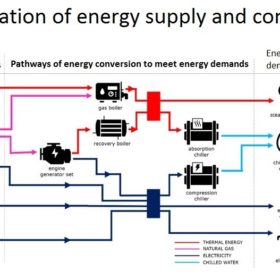
Mathematical model to couple PV, wind with cooling-heating-power systems
Brazilian researchers have proposed a new mathematical model to change parameters for wind and solar resources and different levels of energy demand. The model was originally conceived for tropical regions, but it can actually be used in any location. The new methodology models a highly complex system featuring wind turbines and PV modules, as well as solar collectors, fuel lines, gas boilers, engine-generator sets, recovery boilers, absorption and compression chillers, and grid electricity.
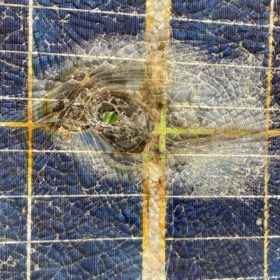
Increasing volumes for PV module recycling in Brazil
Brazilan PV module recycling specialist SunR has already recycled 30 tons of panels and expects to receive another 125 tons. According to its CEO, demand for recycled panels, especially broken panels, has increased considerably in recent years.
