
Canadian Solar secures PPAs for 862 MW of solar in Brazil
The Chinese-Canadian company has secured two more deals in the Brazilian deregulated energy market. A 12-year PPA was awarded by BTG bank while a second, 15-year contract was awarded by power provider Furnas Centrais Elétricas.
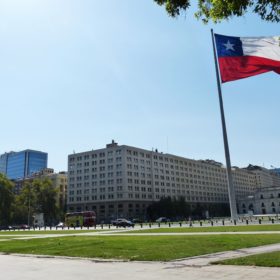
Chile to launch auction for 2.31 TWh of renewables+storage in May
The country’s energy regulator will publish the auction’s final bidding terms in December. Projects awarded contracts under the auction will supply electricity under 15-year power purchase agreements for 2026-2040.

Colombia to hold 5 GW renewables auction in Q1 2021
In addition to the auction, scheduled for the first quarter of 2021, the Latin American country is also defining a green hydrogen roadmap in collaboration with Chile.

Pension funds and corporates could save the world
The second edition of the clean energy investment report produced by IRENA says the industry needs to unlock the $87 trillion being sat on by the world’s biggest investment houses – ‘greening’ the $100 trillion global bond market would help too.

World could add more than 900 GW of solar by 2025 if politicians grasp the nettle – IEA
With the International Energy Agency publishing its latest five-year clean energy forecast today, pv magazine takes a look at the solar content of the 162-page document.

World Bank allocates $50m credit for commercial solar panels in Brazil
The finance is being made available through Santander Brasil as part of an $8 billion global response to Covid-19.

Reform meets opposition
Since President Andrés Manuel López Obrador’s election at the end of 2018, renewable energy in Mexico has faced an uncertain regulatory environment. The current government is focused on restoring the power and influence of Mexico’s state-owned energy companies. But it is now at a crossroads, as the previous administration aimed to open the segment up to foreign investment. Maria Chea of IHS Markit examines the policy decisions the government has taken this year and how these have soured private investor sentiment. These changes will likely weigh on utility-scale PV procurement in the country through 2024.
Major economies should divert fossil fuel Covid-recovery cash to clean energy before it’s too late
A report by Finnish company Wärtsilä has estimated the potential impact if every dollar committed to a non-renewables energy sector recovery was instead funneled to clean power.
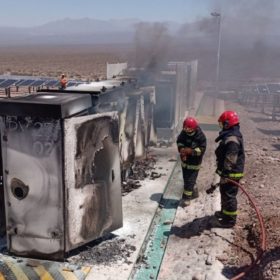
Fire accident at Argentinian solar park’s central inverters
The municipal firefighters of Ullum have been working for about an hour-and-a-half to extinguish a fire in the inverters of the Ullum photovoltaic park, owned by Argentinian energy company Genneia.
New algorithm to identify faults in PV systems
A new algorithm identifies five kinds of faults in PV systems, while also detecting when faults have been resolved to prevent false detections. It is based on the least significant difference test, which is a set of individual t-tests comparing the means of two or more pre-determined groups.
