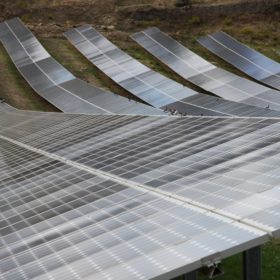
New poly fabs could head off first-half solar project slowdown
Norwegian analyst Rystad Energy has warned the solar industry could suffer the same effects of rising input prices as onshore wind developers grappling with ever more costly steel, with much hinging on how much solar panel raw material polysilicon can be manufactured.

Chinese PV Industry Brief: GCL-Poly wants to move to Shanghai Stock Exchange
In other news, Longi raised funds to build another 18 GW of solar cell capacity and Suntech began work on its 10 GW module factory in Anhui Province.
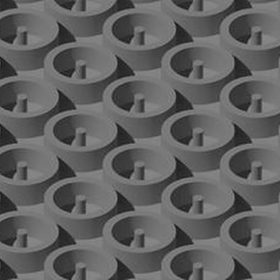
Subwavelength antireflective structure for thin-film solar cells
Consisting of a two-dimensional (2D) array of rings and pillars, the structure can improve the short-circuit current of a thin-film crystalline solar cell by over 50%, its creators say. The subwavelength AR structures are robust to certain degrees of fabrication errors, they add.

Soluna unveils 1.28 kWh portable power generator
Soluna’s new generator can be combined in a two-unit system to reach a capacity of 2.5kWh. It features built-in 120V(AC) output, continuous AC output power of 1,200W, and peak output of up to 2,400W.

Making the case for perovskite quantum dots
Quantum dots, a type of semiconductor based on tiny nanometer sized particles, are a cause for excitement in many disciplines thanks to their unique electronic properties. In solar cell technology, quantum dots fabricated from perovskites could have several advantages over more commonly researched “bulk” perovskite materials, and researchers are beginning to take note of these. A group of scientists in China evaluated recent progress in perovskite quantum dot solar cells, noting both strong potential and a long way to go for this early-stage technology.
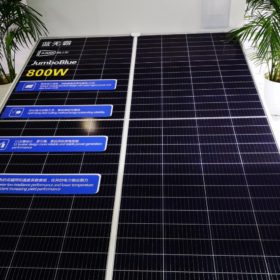
Chinese PV Industry Brief: JA Solar increases production capacity in Vietnam, IDG Energy enters solar business
JA Solar is expected to put another 3.5GW of cell capacity into operation by the end of June and Hong Kong-based IDG Energy Investment will venture into cell manufacturing by establishing a “foreign invested” project company.
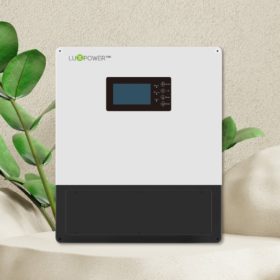
LuxpowerTek launches 8-12kW hybrid inverter
The Chinese inverter manufacturer said the new device can be used for residential and commercial projects as well as to replace diesel power generators or as back-up power. The device features an efficiency of 97.5% and a European efficiency of 98%.
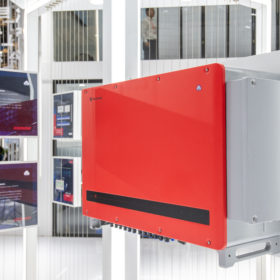
GoodWe: Global solar installations could exceed 240GW in 2022
According to Shen Rong, Vice President of GoodWe, the global PV market could see new installations exceeding 240GW in 2022 on the back of easing supply chain issues. In an interview with pv magazine he lays out the current challenges and opportunities this year’s solar market is likely to see, as well as discussing the PV inverter manufacturers R&D and manufacturing plans.
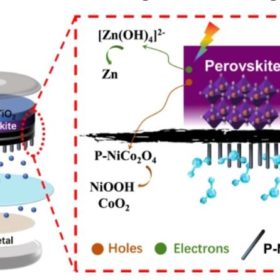
PV-powered rechargeable aqueous zinc battery
Conceived by scientists in China, the device combines an integrated carbon-based perovskite solar cell module with a rechargeable aqueous zinc metal cell. The proposed system achieved an overall efficiency of 6.4%, and a steady operation for more than 200 cycles with little performance degradation.
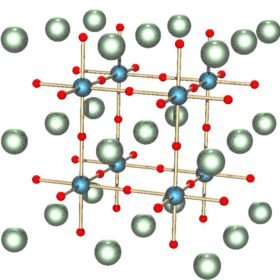
Perovskite solar cell with 24.18% efficiency via low-dimensional perovskitoids
Chinese scientists used perovskitoids as 1D and 0D capping layer materials for the cell’s perovskite layer. These materials enabled an effective and all-around passivation of the perovskite surfaces and grain boundaries, which prevents undesired Shockley-Read-Hall recombination and material degradation. The device achieved a power conversion efficiency of 24.18%, an open-circuit voltage of 1.151 V, a short-circuit current of 25.96 mA/cm2, and fill factor of 80.91%.
