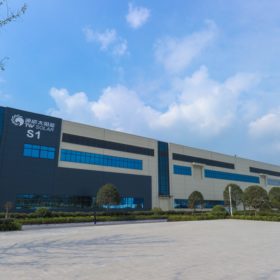
Chinese PV Industry Brief: New solar glass production lines and a new big wafer deal
Luoyang Glass is planning to deploy two solar glass production lines with an annual capacity of 1,200 tons each and wafer maker Wuxi Shangji has secured a big supply agreement from Longsheng New Energy. Furthermore, Tongwei has reported increasing profits driven by its polysilicon business.
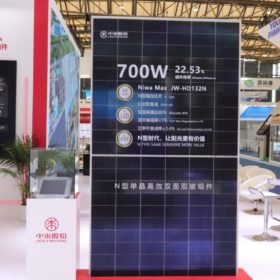
Jolywood unveils 700 W TOPCon PV module
The double-glass product has dimensions of 2,384 x 1,303 x 35 mm and a weight of 38 kg. It is based on the company’s n-type TOPCon 2.0 cell technology dubbed Niwa Max, which the manufacturer said reached efficiencies of up to 25.4% in the laboratory. The module’s efficiency ranges from 21.73 to 22.53%.
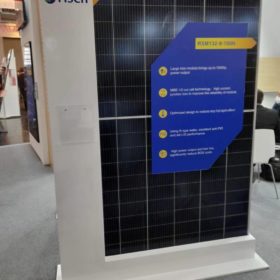
Risen showcases n-type solar panel with output of 700 W
The 210 mm module can reach a power output of up to 703.6 W and a power conversion efficiency of 23.08%. The result was confirmed by Germany’s TÜV SÜD.
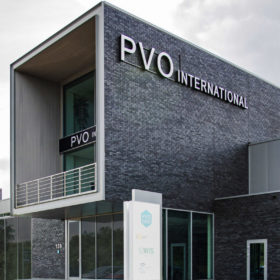
PV modules expensive and scarce, no change in sight
Solar PV modules are currently trading at price levels last seen in 2018 and 2019, according to an account manager at PVO International. EPC companies in Europe, in particular, are suffering. A lack of large-scale integrated PV production on the continent is also playing a role.
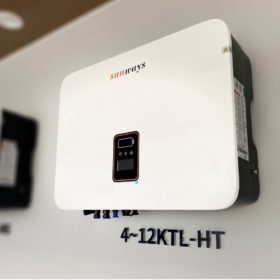
Sunways talks new PV inverter products, manufacturing plans, and strategic direction
In the following interview, pv magazine’s China correspondent Vincent Shaw talks to Li Kui, Vice President, Global Sales and Marketing at Sunways about the PV inverter products it will unveil at this year’s Intersolar Europe, inverter trends, and the plans it has for 2022.

China can ensure a 1.5C world – and continue to dominate the global clean energy supply chain
A report by the IEA laying out two routes for China to reach net zero attempts to persuade policymakers to gun for that goal by 2050, rather than ten years later, and dangles the prospect of continued global dominance as the main reward on offer.
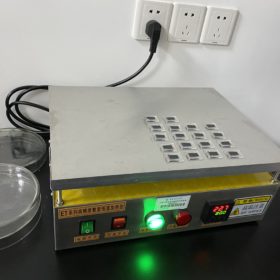
Building perovskite solar cells with waste toner carbon
Scientists in China have fabricated 11.78%-efficient fully printable perovskite solar cells by using an electrode made of waste toner carbon from printer cartridges. The cell achieved an open-circuit voltage of 0.88 V, a short-circuit current density of 24.64 mA cm, and a fill factor of 54.56%.

GCL accepts it has lost 865 million shares in its solar project business
An investigation into the financier which promised to lend the polysilicon company’s solar project development arm $60 million two years ago, has turned up nothing more than an address in St Kitts and Nevis and allegations of fraud against one of its key personnel.
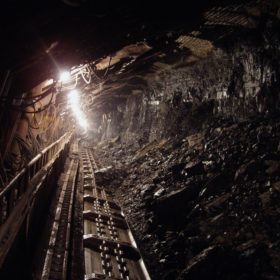
Silicon metal and aluminum industries hit by China power shortages
A combination of booming demand for coal-fired power and a shortage of the black stuff – exacerbated by a political row with Australia – have forced up prices to the extent fossil fuel generators are making a loss on every unit of electricity they produce. pv magazine‘s Vincent Shaw considers the potential solutions.
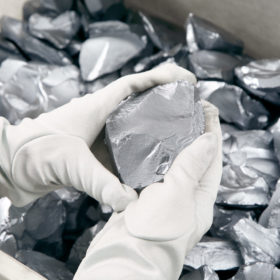
Chinese PV Industry Brief: Rising polysilicon prices, new 5 GW HJT cell factory
Wind power specialist Mingyang Smart Energy has revealed plans to build a 5 GW heterojunction module factory in China’s Jiangsu province, while TBEA has said it intends to raise its majority stake in Xinte Energy from 62% to 67%.
