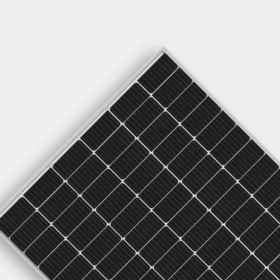
Longi launches 420 W panel for rooftop applications
The monocrystalline module provider added a new product to its Hi-MO 4 series. The new panel has a power output of 410/420 W and a conversion efficiency between 20.5% and 21.0%. The width of the module is standardized, while three different length options can be chosen to maximize capacity in a rooftop project.

GCL-Poly cross defaults over unpaid $500m senior notes
Creditors refused to postpone payment of the three-year notes for another 36-month term and now face receiving less than 5% of the amount due once a proposed debt restructure is completed, with the balance kept back until January 2024 regardless.

Dual passivation tech for 20.14%-efficient perovskite solar cell
Europium ions have been used by Chinese researchers to passivate both the perovskite and electron transport layer (ETL) films of a MAPbI3 perovskite solar cell. As a result, the device’s efficiency was raised by approximately 1.5%. The dual passivation approach also achieved an increase in the cell’s fill factor and open-circuit voltage.

Chinese PV Industry Brief: Another huge glass order and new profit forecasts
Module maker Risen has agreed to buy 34 GW of solar glass from Flat Glass Group (FGG). Both Trina and Goodwee announced strong profit growth for 2020.

GCL on verge of cross default over $500m senior notes
The polysilicon manufacturer yesterday extended the deadline for postponing settlement of the investments until Friday – with the notes set to expire on Saturday.
Chinese PV Industry Brief: Strong profit growth for Sungrow, new wafer prices from Longi
Furthermore, Risen predicts its solar module shipments will reach 15 GW this year and Sze Tan Hung has increased her stake in solar cell and panel maker Solargiga.
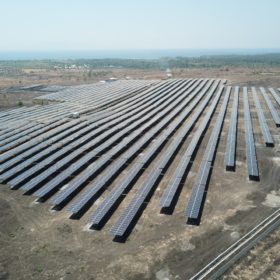
Solar system prices to rise – then fall – in 2021, with another record year anticipated
IHS Markit is predicting the world will add 30% more solar capacity this year.

Chinese solar developers scramble to pay down debts
Shunfeng International is already overdue on debts of $381 million and a deadline for investors holding GCL-Poly senior notes worth $500 million to agree to postpone payment is due to expire today as the company prepares to vote on a $309 million, 430 MW solar project sell-off.
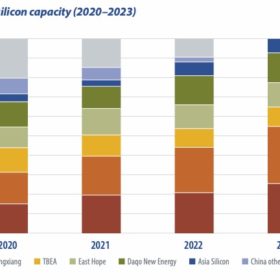
Xinjiang sanctions and the PV supply chain
Due to forced labor concerns, a ban on imports from Xinjiang to the United States appears likely. This could be another blow for polysilicon producers hit by industrial accidents and the threat of floods in the third quarter of 2020. Chinese polysilicon prices have surged more than 50% in a matter of a months. Consequently, wafer prices have skyrocketed, bringing increasing costs to the solar cell and PV module segments. In the face of price hikes, some projects are now postponed until the first half of 2021.
Trina claims 3% energy gain with new tracking system over traditional trackers
The company’s integrated tracker manufacturer Nclave developed a new system designed primarily for large-form factor modules and with a new algorithm that promises to boost yield in diffuse light conditions.
