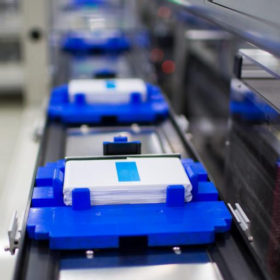
Battery maker CATL ramps up investment in German gigafab to €1.8 billion
Previously, a mere €240 million was set to flow into the giga-factory. The corporation’s management reasoned new demand for its battery cells made more investment necessary.
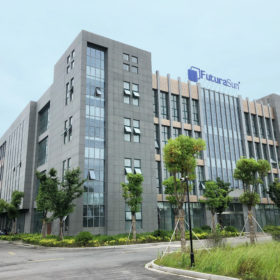
Italy’s FuturaSun opens 500 MW module fab in China
The company has opened a 500 MW factory in Jiangsu province. The fab will produce monocrystalline multi-busbar modules and, according to FuturaSun, plans are already under way to double its capacity as it continues to take the fight to the big boys.
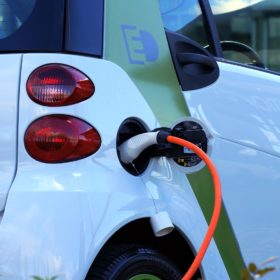
Ganfeng Lithium wagers $28m on Sonora lithium deposits in Mexico
The Chinese lithium-ion battery producer has taken significant stakes in two U.K. entities associated with a mine which could hold up to 8.8 million tons of the raw material in clay deposits.
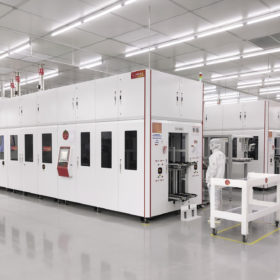
The weekend read: Atomic layer deposition storms market for PERC
Technology made in China competes with conventional plasma-based equipment to deposit the aluminum oxide layers at the heart of passivated emitter and rear contact (PERC) cells.

Study examines 7.8 TW solar potential of the Belt and Road route
China’s vast continent-spanning infrastructure project could fertilize solar growth along its perimeter at considerable scale as energy demand in the countries along the route is set to surge.
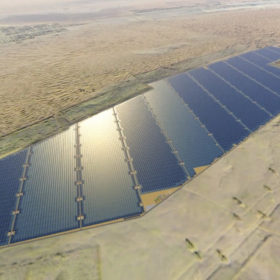
Jinko makes a convincing case as it upgrades mono capability
The Shanghai-based wafer, cell and module maker appears to be steering a steady course through a tumultuous period for the solar industry and its plans are another sign high-efficiency modules may soon have to do more to earn that label.
GCL enters another expensive sale-and-leaseback deal
The heavily indebted poly manufacturer and project developer will receive an immediate $50 million fillip from the sale of an 80 MW solar project but will then have to pay back $76 million over ten years.
Talesun pivots Thailand fab towards sanctioned US market with high efficiency retrofit
The Chinese manufacturer has embarked upon an upgrade of 1.5 GW of its module production lines which is set to be completed this year. Previously used to get around trade restrictions applied by the EU, the Thai facility will now produce output for the U.S. market.

ReneSola needs to sell projects as Romanian loan deadline looms
The Shanghai company’s decision to go forward as a pure play developer puts it at odds with its peers and the diminishing margins reported in its Q1 figures illustrate why it may prove to be a high-stakes gamble to bet against manufacturing.

Researching some cool new battery materials
Scientists from China and the United States have developed an additive for electrolyte materials they say could improve the operating temperature range for lithium-ion batteries, allowing them to operate down to minus 40 degrees Celsius without compromising performance at temperatures up to 60 degrees Celsius.
