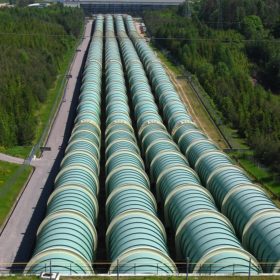
Polish utility PGE wants to couple 200 MW/820 MWh of battery storage with existing pumped-hydro facility
The project is located 10 km from the Baltic Sea, where PGE is planning to build offshore wind farms with a total capacity of 3.5 GW.
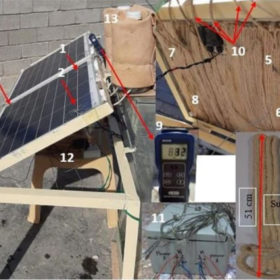
Cooling down solar modules with cotton wicks immersed in water
The novel technique consists of attaching cotton wicks immersed in the water (CWIWs) to the backside photovoltaic module. The water is supplied to cotton wicks from top to bottom by gravity which the scientists said helps the effective absorption of cotton and reduces water consumption.

New kind of black silicon shows improved light-trapping properties
Scientists in Russia have developed a new wide-band optical absorber called ‘black silicide’ which they claim is more adjusted to match AM-1.5 solar spectrum with theoretically higher photogenerated current density. It could be used for tandem operation in photovoltaic devices.

North Macedonia improves regulatory framework for rooftop PV
The Macedonian government increased the size limit for PV installations under net metering, launched a €1 million rebate scheme, and is now planning to eliminate all grid fees for prosumers.
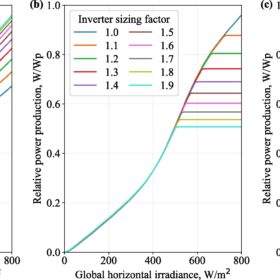
The right tilt angle, inverter sizing, row spacing for optimal yield forecast
Researchers in Hungary have found that a high tilt angle may increase power forecast errors in a PV installation by up to 49%. They also ascertained that
undersizing the inverters by a sizing factor of 1.5 may reduce forecast errors by up to 25%.

New photovoltaic tiles from Estonia
Estonian startup Solarstone has developed two solar tiles with an efficiency of up to 19.5% and an operating temperature coefficient of -0.41% per C. It recently secured €10 million in funds to expand sales across Europe.

Slovakia restarts rebate program for residential PV, heat pumps
The authorities in Slovakia are offering rebates to cover up to 50% of the cost of buying and installing solar water heaters, PV systems with generation capacities of up to 10 kW, heat pumps, biomass systems, and solar-thermal collectors.
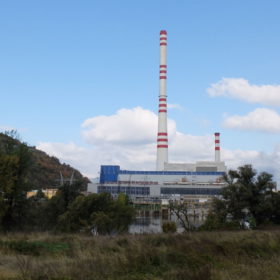
Bosnian utility to deploy 50 MW of solar on coal waste site
Bosnian utility EBiH plans to deploy solar plants across its coal waste sites. The first two projects will be built on a coal dump in the municipality of Gračanica.
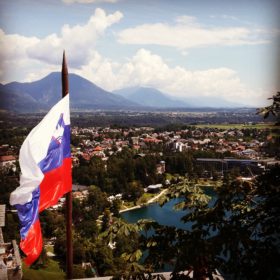
Slovenia announces plan to deploy another 1 GW of solar by 2025
The plan envisages opening the Slovenian energy market to large-scale solar plants and is intended to reduce the country’s dependence on fossil fuels.
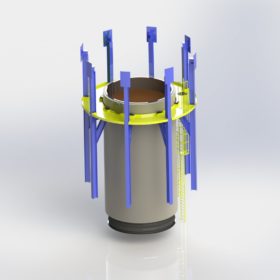
Hybridizing compressed air, thermal energy storage in post mining infrastructure
Scientists in Poland have developed a compressed air energy storage technology using a thermal energy storage (TES) system built into a disused mine shaft. The system works without external heat sources, and utilizes an air compressor, a compressed air reservoir with a built-in thermal energy storage system, and an air expander.
