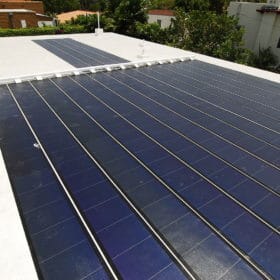
Amorphous silicon solar cells still niche market
In the second interview of a series, Arvind Shah, a professor at École polytechnique fédérale de Lausanne, told pv magazine about the challenges facing amorphous silicon cells. He said the tech could be used in some window applications and greenhouses, but not in rooftop projects, as the stabilized efficiency of these cells is too low.
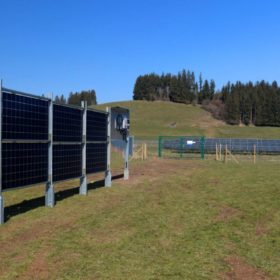
German power provider tests vertical agrivoltaics
Lechwerke is testing two pilot systems close to existing solar parks. It also aims to build its first large-scale project.
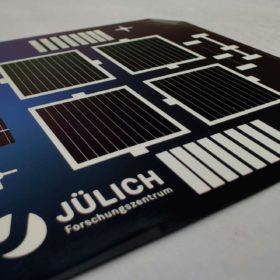
Solar cell with transparent passivate contact achieves 23.99% efficiency
German scientists have built a solar cell with ultra-thin transparent layers that are claimed to be effective in preventing recombination events. The technology, which has the potential of achieving efficiencies close to 26%, may be easily scaled up for commercial production, according to the researchers.
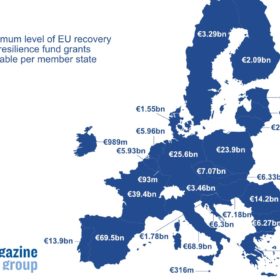
EIB and Greece agree first in EU to co-manage €5 bln of recovery plan
The European Investment Bank and Greece this week signed a first-of-its-kind agreement to jointly manage €5 billion of investment concerned with the EU member state’s post-Covid recovery plan. The strategy has a key focus on green energy.
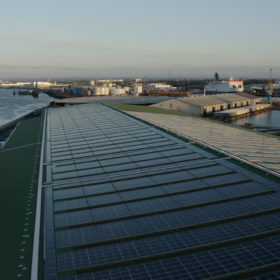
UK added 175 MW of solar in first quarter
More than 7% of the U.K.’s solar generation capacity is now unsubsidized, according to trade body Solar Energy UK, with the nation reaching more than 14 GW of photovoltaic projects during the first three months of the year.
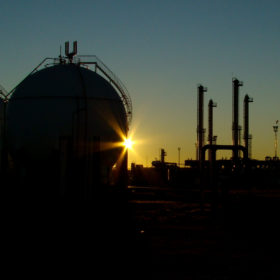
Italy should embrace solar, not gas to hit raised climate ambition
Instead of splurging €11 billion of EU cash on uneconomic new generation capacity, the Italian authorities–and electricity bill payers–would be better served investing in a mix of current clean power technologies which would include almost 17 GW more solar capacity.
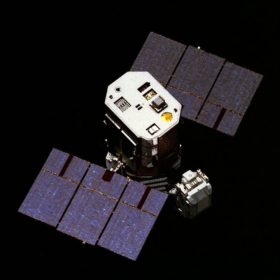
5N Plus enters space solar cell business with acquisition of Azur Space
The purchase price should range between €73 million and €79 million. Azur Space produces triple-junction space solar cells with an average efficiency of up to 30% and is planning to develop ultra-thin solar cells with up to 35%.
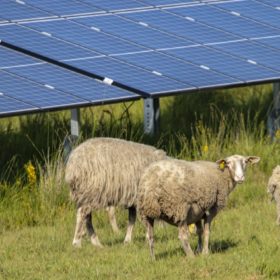
Solar power and sheep, rather than soldiers
BayWa r.e. recently installed a 30 MW solar array on a former military base in France. The project is designed so that farmers can also use the land to breed sheep.

Five bidders to compete in final phase of Uzbekistan’s 200 MW PV tender
The 200 MW solar park will be built in Sherabad, in southeastern Uzbekistan’s Surkhandarya region.
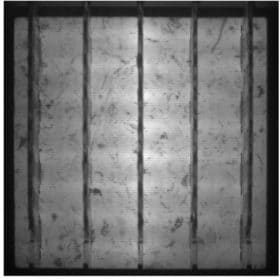
Low outdoor degradation for 20.76%-efficient solar cells made of UMG silicon
Spanish manufacturer Aurinka has tested the degradation rate of its 20.76%-efficient solar cells made of 100% upgraded metallurgical grade (UMG) silicon and has found it shows the same values as conventional polysilicon. The company is currently building a UMG factory in northern Spain.
