Portugal’s regulator greenlights plan to expand grid capacity
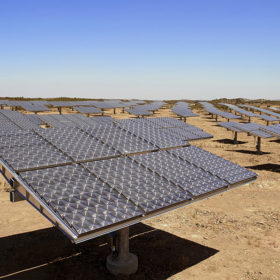
The plan is necessary to the further development of big solar parks in the southern part of the country. Overall, €474 million will be invested in grid enhancement over the next four years.
Thin film manufacturer, Calyxo finds new investor
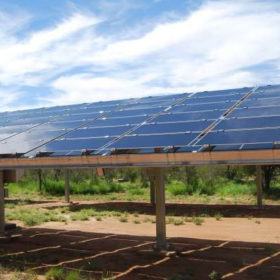
TS Group GmbH has taken over the entire business of the insolvent PV manufacturer. All of the German company’s 130 workers will continue to be employed. Production of cadmium telluride thin film PV modules at the Bitterfeld-Wolfen site, near Berlin, will continue.
Scatec secures third large-scale PV project in Ukraine
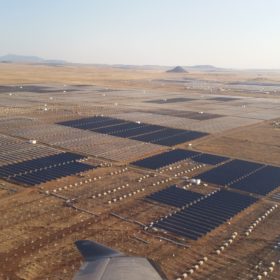
The Norwegian developer, which is already developing two solar plants totaling 83 MW in the Eastern European country, has now secured an agreement to build a 47 MW facility in the Mykolaiv region in south Ukraine.
Eni builds first solar park at Italian facilities
The Italian oil group is building a 26 MW plant at its industrial site, Assemini, on the island of Sardinia. The system is part of a 220 MW solar project pipeline that Eni aims to install at its Italian sites between 2018-2021.
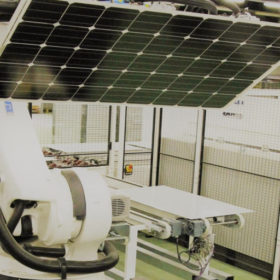
Recom acquires Jabil’s solar module production lines
The PV module manufacturer started negotiations with Jabil, after the U.S. introduced duties on solar imports. Recom plans to restart manufacturing activities with Jabil’s 700 MW production equipment in the first quarter of 2019. Where exactly this will take place, however, has not been disclosed yet.
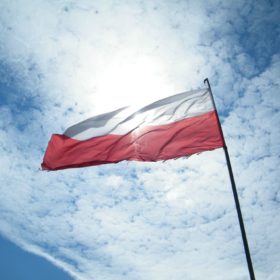
Solar to reach 1.2 GW in Poland by the end of 2020
With around 300 MW of installed PV power at the end of May, Poland still needs volume to become a major European PV market. More capacity is expected to come online over the next years, however, as a result of the auction mechanism for renewables. Around 360 MW was allocated by the two auctions held by the Polish government, although only 27 MW of this is currently online.
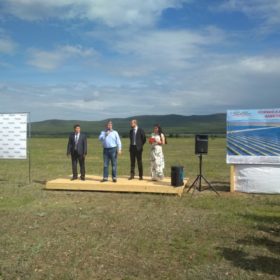
Hevel breaks ground on 15 MW solar plant in Siberia
With completion scheduled by November 2019, the Khorinskaya PV facility will be the second solar park to be built by the Russian solar module manufacturer in the Republic of Buryatia.
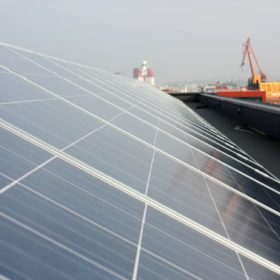
Power2U energy management platform launched in Sweden
InnoEnergy has launched its energy management platforms with local partners in Sweden. The platform would help integrate renewable energy resources through battery storage management algorithms. An expansion into other markets is planned already.

ABB finalizes $2.6bn GE Industrial Solutions acquisition, deploys VPP in Italy
The company reports that its IoT ABB Ability platform connects to existing GE Industrial Solutions’ installations. The company will supply its products to GE, with the GE brand name being retained. Access to the North-American market was named as one of the primary motivators for the acquisition. At the same time, the company inked a deal to support Be Power in the Italian market for dispatching services with its ABB Ability solution.

German scientists use chemical process to boost solar cell efficiency
A team of researchers from the University of Erlangen-Nuremberg in Germany has published research into a physical-chemical process known as singlet fission, which it says could boost solar efficiency by as much as 50%.
