Debunking myths about PV system orientation, dimensioning
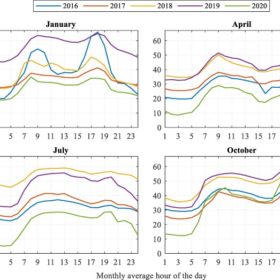
New research from LUT University shows that there is no single correct orientation for a PV installation.
Creative thinking for vertical east-west bifacial PV projects
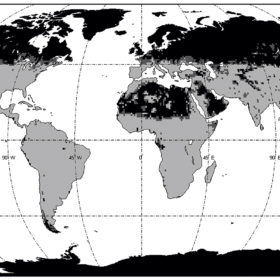
A Finnish-Norwegian research group has assessed the global potential of vertical east-west bifacial PV (VBPV) projects and found that these installations may provide a low LCOE at Nordic latitudes, in Central Europe and subtropical desert areas. The researchers also found that residential and commercial VBPV systems are a grid-friendly solution for low-voltage networks when compared to monofacial arrays.
The Hydrogen Stream: New fuel cell electric vehicle from Canada
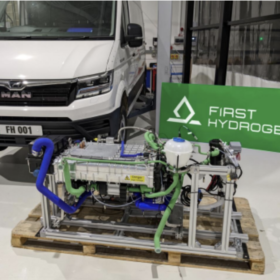
Elsewhere, the Fraunhofer ISE research institute has unveiled a new tool for high-resolution power-to-X kinetic analysis, and German entities have signed partnership agreements with the Abu Dhabi National Oil Company.
Large-scale storage options for compressed hydrogen
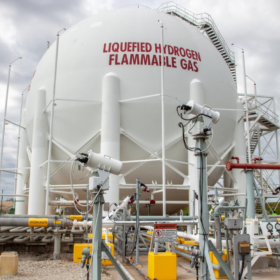
Researchers from Finland and Sweden have reviewed different ways to store compressed gaseous hydrogen, including storage vessels, geological storage, and other underground options.
Baywa re wraps up major virtual PPA with Finnish packaging giant
The German clean power company and Huhtamaki have signed a 10-year deal that will ensure the construction of two solar farms in southern Spain with an aggregate generation capacity of around 135 MWp.

Low-bandgap GaInNAsSb solar cell for multi-junction architectures
Developed by researchers in Finland, the solar cell is intended to be used as part of lattice-matched multi-junction solar cells. It achieved a short-circuit current density of 15.2 mA/cm2 and external quantum efficiency of 0.79.

Massive solar project under development in Finland
The solar park will occupy 500ha of abandoned peatland in southern Finland. The project’s levelized cost of energy is estimated at less than €0.04/kWh.
Commission flags up €875m renewables project fund
A call for grant proposals has been promised this month, with the bloc’s executive yesterday firing the gun on a separate exercise related to cross-border EU energy infrastructure projects.

The Hydrogen Stream: Plans for $75bn, 50 GW green energy hub in Western Australia
Plus, as the European Commission prepares to present its ‘Fit for 55’ climate change package tomorrow, European companies are continuing to develop hydrogen plans, including Shell in Norway and Siemens in Germany.
‘Residential batteries are less profitable than selling excess power to the grid’
Although self-consumption of solar power is the optimal economic approach, the expense of household batteries at present outweighs the increased ability they offer to use electricity generated on the roof. Whether aggregated ‘virtual batteries’ offer better returns is an open question, due to lack of electricity company transparency.
